



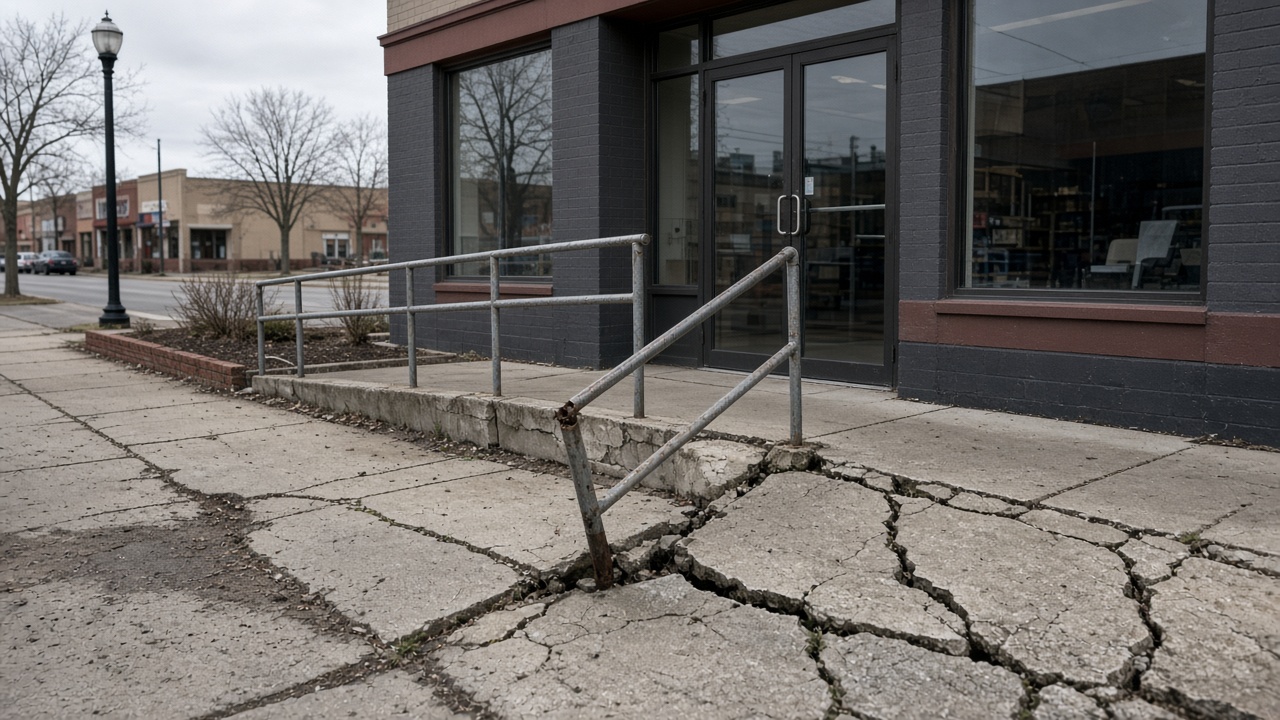







A New York appellate court ruled against Wells Fargo Bank, N.A. in a mortgage foreclosure case involving Windsor Burke and a limited liability company (LLC). The court's decision, issued on August 26, 2026, affects the bank's efforts to reclaim a property in Brooklyn, New York, and highlights the complexities of mortgage foreclosure laws.
The ruling is significant as it underscores the importance of timely legal proceedings in foreclosure cases. It serves as a reminder for lenders to actively manage their cases to avoid dismissal due to abandonment.
Background
The case, Wells Fargo Bank, N.A. v. Burke, was initiated when Windsor Burke executed a $45,000 note in favor of Delta Funding Corporation on February 3, 1999. This note was secured by a mortgage on a property in Brooklyn. In June 2006, Burke transferred the property to NB 105 4th Apts, LLC, which later transferred it to 105 4th Units, LLC.
Wells Fargo, as the successor to Delta, filed a foreclosure action against Burke and the LLC in October 2009. The case faced numerous legal challenges, including a motion by the LLC to dismiss the complaint as time-barred. The court denied this motion in 2010, but the case lingered for years with little progress.
In February 2014, the Supreme Court issued a conditional order of dismissal, stating that Wells Fargo had unreasonably neglected to prosecute the action. The court required the bank to take further action within 90 days to avoid dismissal. However, the bank did not follow through, leading to the current appeal.
The Ruling
The appellate court affirmed the lower court's decision, which denied Wells Fargo's unopposed motion to vacate the conditional order of dismissal and restore the action to the active calendar. The court noted that it had mistakenly issued the conditional order under a statute that was not applicable since the issue had not been joined in the case.
The court stated, "the Supreme Court correctly found that it was without authority to dismiss the complaint pursuant to CPLR 3216, since issue had not been joined."
Furthermore, the court directed the dismissal of the complaint as abandoned under CPLR 3215(c). This statute requires that if a plaintiff does not take steps toward entering a judgment within one year after a default, the court must dismiss the complaint unless there is sufficient cause to avoid dismissal.
The ruling emphasized, "the court properly, sua sponte, directed dismissal of the complaint as abandoned pursuant to CPLR 3215(c)."
The judges involved in the ruling were Cheryl E. Chambers, Deborah A. Dowling, Lillian Wan, and James P. McCormack.
Impact
This ruling has significant implications for mortgage lenders and borrowers alike. It highlights the necessity for lenders to actively pursue their cases and not allow them to stagnate. Failure to do so could result in the loss of their right to foreclose on properties due to abandonment.
The case also reinforces the importance of understanding procedural rules in foreclosure actions. It serves as a cautionary tale for financial institutions, reminding them that neglecting to take timely action can lead to unfavorable outcomes.
What's Next
Wells Fargo may consider appealing this decision to a higher court, but details on any potential appeal were not available in the court filing. There are no related cases pending that were mentioned in the ruling.