

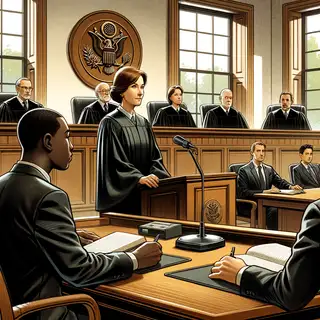










The Arkansas Court of Appeals has upheld the conviction of Brandon Hughes for negligent homicide. This decision, delivered on August 26, 2026, affects Hughes, who was sentenced to 40 years in prison and fined $10,000. The ruling also raises important questions about juror bias and the legal standards for preserving objections during a trial.
Brandon Hughes faced charges after a fatal car accident on February 12, 2024, which resulted in the death of Timothy Bratton. Hughes pleaded guilty to negligent homicide following a head-on collision on Highway 70 in Garland County. According to court documents, Hughes had a blood-alcohol concentration of 0.232 and cocaine metabolites in his system at the time of the accident.
The case reached the Arkansas Court of Appeals after Hughes appealed his conviction. He argued that the circuit court erred by not removing Juror No. 7, who disclosed that he recognized Kaye Bratton, the victim's family member, from their mutual employment at CHI St. Vincent Hospital. Hughes contended that this recognition could have influenced the juror's impartiality.
The appeal was filed in response to the decision made by the Garland County Circuit Court, where Hughes had pleaded guilty and faced a jury for sentencing. The circuit court judge, Ralph C. Ohm, presided over the case. During the sentencing phase, Juror No. 7 informed the court of his recognition of Kaye Bratton after her testimony. He claimed that he had not discussed the case with her and could remain impartial.
After hearing Juror No. 7's explanation, the circuit court asked both the prosecution and Hughes's defense attorney if they had any objections to the juror remaining on the panel. Both parties declined to object, leading to Juror No. 7 staying on the jury. This decision became central to Hughes's appeal.
The court ruled that Hughes's argument regarding Juror No. 7 was not preserved for appellate review. The court noted that to preserve a juror challenge, a defendant must raise a contemporaneous objection and receive a ruling from the circuit court. Since Hughes's counsel did not object when given the opportunity, the court found that the issue could not be raised on appeal.
The court stated, "Hughes acknowledges that there was no contemporaneous objection to Juror No. 7 remaining on the jury. However, he makes his argument pursuant to Wicks v. State, relying on the third exception to the contemporaneous-objection rule."
Furthermore, the court explained that the third Wicks exception applies only when an error is so serious that the circuit court has a duty to intervene without an objection. The court found that this exception did not apply in Hughes's case, as there was no evidence of flagrant or highly prejudicial error that would necessitate such intervention.
In addition to the juror bias issue, Hughes's appeal also included claims that Juror No. 7 should have been removed due to his lack of attention during voir dire, implied bias because of his connection to Kaye Bratton, and late disclosure of his recognition. However, the court declined to address these arguments, stating that they were not preserved for review.
The ruling from the Arkansas Court of Appeals has significant implications for Hughes and others in similar situations. It reinforces the importance of timely objections during trial proceedings and clarifies the standards for juror bias claims. The court's decision emphasizes that failure to object at the appropriate time can limit a defendant's ability to challenge juror impartiality on appeal.
This ruling may affect future cases involving juror bias and the standards for preserving objections. Defendants and their attorneys must be vigilant in raising concerns about jurors during trials to ensure that their rights are protected. The court's affirmation of Hughes's conviction also serves as a reminder of the serious consequences of negligent actions, particularly when they result in tragic outcomes.
As for what’s next for Brandon Hughes, he has limited options for further appeal. The ruling from the Court of Appeals is generally considered final unless there are grounds for a further appeal to the Arkansas Supreme Court. Details were not available in the court filing regarding any related cases or potential future actions by Hughes.