










The Arkansas Court of Appeals has affirmed the conviction of Charles Ewing, Jr. for being a felon in possession of a firearm. This decision comes after Ewing appealed his conviction, arguing that the trial court made several errors regarding evidence admission. The ruling affects Ewing's legal standing and could influence similar cases involving firearm possession by felons.
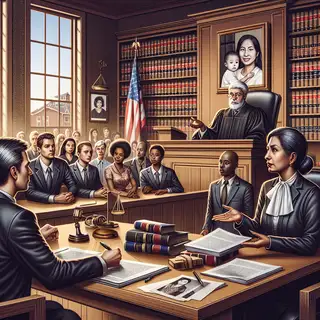
Charles Ewing, Jr. was found guilty in a Phillips County Circuit Court jury trial. He faced multiple serious charges, including first-degree murder and first-degree battery, stemming from a shooting incident that resulted in the death of Ashley Ewing and injuries to Edward Griffin. The trial focused on the charge of possession of a firearm by a felon, which was tried separately. Ewing's defense raised concerns about the admission of certain testimonies and evidence during the trial.
Evidence presented during the trial revealed that Ashley Ewing had obtained an ex parte order of protection against Charles, which was set for a hearing the day after the shooting. On the day of the incident, police found Griffin with a gunshot wound and Ashley deceased nearby. A 9mm gun was discovered in Griffin's waistband, but the bullet that killed Ashley was determined to be a .45 caliber, indicating it could not have come from the gun found on Griffin. Witnesses testified about the events leading up to the shooting, including a video call between Ashley and a friend, Nykalla Young, during which Ashley expressed fear regarding Charles's presence.
During the appeal, Ewing argued that the trial court made several errors. He claimed that the court improperly admitted testimony from his sister Patricia regarding a statement he made about not shooting Ashley. Ewing also challenged the admission of Young's testimony as hearsay and argued that it was prejudicial. Additionally, he contested the admission of testimony from another sister, Marilyn, claiming it was unduly prejudicial and irrelevant.
The court ruled that the trial court did not abuse its discretion in admitting the testimonies. Chief Judge N. Mark Klappenbach stated, "The evidence that Charles repeatedly voiced a desire to kill Ashley is relevant to the issue of whether he possessed a gun on the day of the shooting and shows proof of motive, intent, and plan." The court found that the testimonies provided context and were admissible under Arkansas law.
This ruling has significant implications for Ewing, who remains a convicted felon with a firearm possession charge. The court's decision reinforces the importance of evidentiary rules in criminal trials and how they apply to cases involving violent crimes. It also highlights the court's discretion in determining what evidence is admissible and the weight it carries in the jury's decision-making process.
Looking ahead, Ewing has the option to appeal this ruling to the Arkansas Supreme Court. However, details about whether he will pursue this route were not available in the court filing. The outcome of this case could set a precedent for how similar cases are handled in the future, particularly regarding the admissibility of evidence and the rights of defendants in criminal proceedings.