



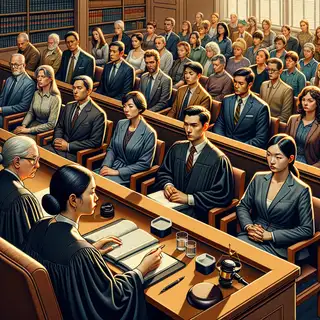








A District Court in Washington, D.C., has ruled that police acted lawfully when they stopped and arrested Mark Antoine West at a restaurant, allowing evidence of a gun found during the arrest to be used in court. This ruling is significant as it reinforces the legal standards surrounding police stops and arrests, particularly in situations involving potential threats of violence.
The case, officially known as United States v. West (Criminal No. 2026-0047), centers on an incident that occurred in February 2026 at a restaurant where West was attending a gender reveal party. The court's decision affects West, who faces charges of unlawful possession of a firearm, and sets a precedent for how similar cases may be handled in the future.
Background
Mark Antoine West was at a restaurant in February 2026 when he became involved in a verbal dispute with another patron. The situation escalated to the point where the restaurant manager called 911, expressing concern that a fight was imminent. Multiple calls to emergency services described West as aggressive, prompting a swift response from law enforcement.
Four U.S. Secret Service officers arrived at the restaurant shortly after the 911 calls. They were informed by the restaurant manager that West was the individual causing the disturbance and needed to be removed from the premises. The officers approached West, who was identified by his distinctive yellow and black jacket, and attempted to escort him out.
The Ruling
Judge Amir H. Ali presided over the case and concluded that the police officers acted within their rights under the Fourth Amendment when they stopped and arrested West. The court ruled that the officers had reasonable suspicion to conduct a brief investigatory stop based on the dispatch report of an assault that matched West's description. The judge noted, “The government has shown the stop and arrest were justified under applicable standards.”
West's defense argued that the officers' actions constituted an unlawful arrest, claiming they did not have probable cause to detain him. However, the court found that once West refused to leave the restaurant at the manager's request, the officers had probable cause to arrest him for unlawful entry. Judge Ali stated, “The officers had probable cause to believe West was committing unlawful entry by the time they arrested him.”
Impact
This ruling has significant implications for both law enforcement practices and individuals' rights. It clarifies the boundaries of what constitutes reasonable suspicion and probable cause in situations where police are responding to potential threats. The court's decision reinforces the idea that police can act quickly and decisively when they believe there is a risk of violence, especially in public spaces.
Moreover, this case highlights the importance of the Fourth Amendment, which protects citizens from unreasonable searches and seizures. By affirming the legality of the officers' actions, the court sets a precedent that could influence future cases involving similar circumstances. It emphasizes that the context of a situation, including the presence of aggressive behavior and the need for public safety, plays a crucial role in determining the legality of police interventions.
What's Next
West's case will proceed with the evidence from the arrest, including the gun found during the incident, now admissible in court. Details were not available in the court filing regarding whether West plans to appeal the ruling or if there are related cases pending.