






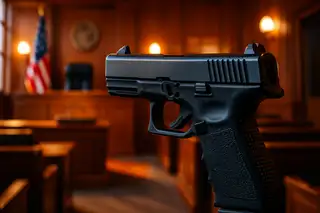




The Eighth Circuit Court of Appeals has upheld the sentence of Kentrell Vantrice Powell for unlawful possession of a firearm as a felon. This ruling, filed on August 20, 2026, affects Powell, who was sentenced to 150 months in prison after a series of events involving law enforcement in Dubuque, Iowa. The court's decision underscores the seriousness of firearm offenses, particularly when they involve the assault of law enforcement officers.
Powell's case began when officers responded to a disturbance at a convenience store on August 22, 2024. Upon their arrival, Powell attempted to flee the scene. Officer Manders pursued him and ordered him to stop multiple times. After apprehending Powell, officers discovered he was in possession of a firearm, which he had pointed at Officer Manders during the arrest.
The legal dispute arose when Powell challenged the six-level increase in his sentencing guidelines, which the district court applied based on the finding that he had assaulted an officer during the incident. The increase was based on the United States Sentencing Guidelines (USSG) § 3A1.2(c)(1), which addresses assaults against law enforcement. The case made its way to the Eighth Circuit after Powell pleaded guilty but contested the sentencing enhancements.
During the sentencing hearing, Officer Manders testified that Powell had pointed the firearm at him, and the weapon was in a position that indicated it could be discharged. The district court found that Powell's actions constituted an assault, regardless of whether he pulled the trigger. The court stated, “Pointing the firearm at the officer even without pulling the trigger constitutes an assault with a firearm.” This ruling was based on the understanding that the firearm was loaded and had a round of ammunition with a puncture mark, indicating a misfire.
The Eighth Circuit, led by Chief Judge Colloton, affirmed the district court's decision. The judges agreed that there was sufficient evidence to support the increase in Powell's sentence. The court noted, “We conclude, at a minimum, that there was no clear error in finding that Powell committed assault by attempted battery.” The judges emphasized that the common-law definition of assault applies in this context, which includes actions intended to cause fear of immediate bodily harm.
This ruling is significant as it reinforces the legal consequences of firearms offenses, especially when they involve threats to law enforcement. The court's decision highlights the importance of maintaining safety for officers who are enforcing the law. The ruling also serves as a reminder that firearm possession by felons carries serious penalties, particularly when accompanied by violent actions.
Going forward, this ruling may impact similar cases involving firearm possession and assaults on officers. It sets a precedent that reinforces the application of sentencing enhancements when a defendant's actions threaten the safety of law enforcement. This decision could influence how future cases are prosecuted and how sentencing guidelines are interpreted in the context of firearm-related offenses.
As for what’s next for Powell, he has the option to appeal the Eighth Circuit's ruling. However, details regarding any potential appeal or related cases were not available in the court filing. The outcome of this case may also prompt discussions about the broader implications of firearm laws and the treatment of offenders in similar situations.