


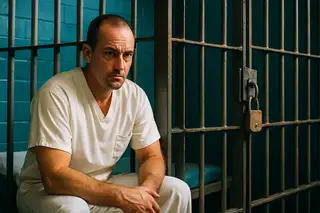








The Kentucky Supreme Court has upheld the conviction of Joseph Gordon Young for arson and wanton endangerment, affirming a total prison sentence of 32 years. Young was found guilty of setting fire to a home occupied by three individuals, including a minor with autism. The court's decision, rendered on August 20, 2026, is significant as it addresses issues of double jeopardy and the admissibility of expert testimony in criminal trials.
Young's case began in May 2023 when he was living with Tracie Wallace, her elderly grandmother, and her autistic sister in Louisville, Kentucky. After offering to help with odd jobs, Young was allowed to stay in their basement. However, on May 16, 2023, he left the house early in the morning, purchased gasoline, and returned to the residence. Shortly after his return, a fire erupted on the front porch, causing significant damage and endangering the lives of the occupants. Young was later arrested and charged with multiple offenses, including first-degree arson and wanton endangerment.
The Jefferson Circuit Court found Young guilty after a multi-day jury trial. He received a 32-year sentence, which included 22 years for arson and 10 years for each count of wanton endangerment, to be served consecutively. Young appealed the conviction, claiming several errors during the trial, including a violation of double jeopardy, inadequate representation by counsel, and improper admission of expert testimony.
The Kentucky Supreme Court, led by Justice Nickell, reviewed Young's claims and ultimately affirmed the lower court's decision. The court ruled that Young's convictions for arson and wanton endangerment did not violate the double jeopardy clause. The court explained that the two offenses require proof of different elements, stating, "Young intended to start a fire to destroy or damage the home while simultaneously acting wantonly and with utter indifference to the value of the lives of the three women lying in their beds inside the house." This ruling clarifies that a single act can lead to multiple charges if each charge has distinct legal requirements.
Additionally, the court addressed Young's concerns regarding his request for new counsel, stating that the trial court had adequately considered his request and found no sufficient grounds for replacement. Young's dissatisfaction with his attorney's performance did not constitute an adequate reason for the court to grant a new attorney.
Moreover, the court upheld the trial court's decision to allow expert testimony from arson investigators. Young argued that their opinions invaded the jury's role in determining his guilt. However, the court concluded that the testimony was relevant and necessary for the jury to understand the evidence, stating, "Their opinions were scientific in nature and were outside the common knowledge of a layperson." This aspect of the ruling reinforces the importance of expert testimony in cases involving complex scientific evidence.
Finally, the court rejected Young's argument that the testimony regarding the autism of Tracie's sister was prejudicial. The court found that this background information was relevant to understanding the nature of the crime and did not unfairly prejudice the jury.
The Kentucky Supreme Court's ruling in this case has important implications for future criminal cases, particularly those involving multiple charges stemming from a single act. It reinforces the principle that distinct offenses can be prosecuted separately, even if they arise from the same conduct. The court's decision also highlights the role of expert testimony in criminal trials and the standards for evaluating the admissibility of such evidence.
Looking ahead, Young's options for appeal are limited, as the Kentucky Supreme Court's decision is final. There are no indications of related cases pending that could impact this ruling. The court's affirmation of Young's conviction serves as a reminder of the serious consequences of criminal behavior and the legal system's commitment to ensuring justice for victims.