



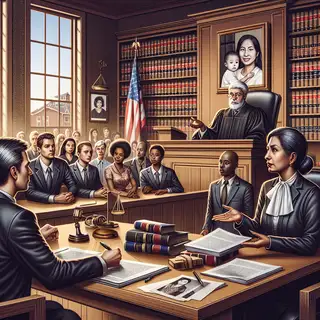








A U.S. District Court has ordered the return of Jose Eliezer Martinez-Andino, a 21-year-old Honduran citizen, after ruling that his deportation was conducted without proper due process. The court's decision affects Martinez-Andino, who has Special Immigrant Juvenile (SIJ) status, allowing him to work in the United States and support his U.S. citizen child. This ruling highlights the importance of procedural rights in immigration cases.
The case, Martinez-Andino v. Mullin, was filed in the District of Columbia under Civil Action No. 2026-1208. The court, presided over by Judge Beryl A. Howell, found that the U.S. Department of Homeland Security (DHS) and other government agencies violated Martinez-Andino's Fifth Amendment rights during his detention and deportation process.
Martinez-Andino entered the United States as an unaccompanied minor in 2020 and later received SIJ status, which allows certain minors to seek lawful permanent residency. However, on March 18, 2026, he was arrested by immigration officials while driving in Montana and subsequently detained. Within 48 hours, he was coerced into signing forms for voluntary departure, despite expressing a desire to consult with his attorney. He was deported to Honduras on April 10, 2026, just weeks after his arrest.
The court's ruling stemmed from Martinez-Andino's claims that he was deprived of access to legal counsel and was not fully informed of his rights when he signed the deportation forms. His attorney argued that he did not understand the documents he signed and had requested to revoke his agreement to leave the U.S. but was ignored. The court noted that Martinez-Andino's requests for legal assistance were repeatedly denied during his detention.
In its decision, the court stated, "Plaintiff has shown a likelihood of success on the merits of his Fifth Amendment claim," emphasizing that Martinez-Andino's deportation likely violated his rights due to the lack of informed consent. The court also highlighted that the forms he signed indicated he could change his mind about leaving the U.S. at any time before departure, which he attempted to do.
The ruling directs the government to facilitate Martinez-Andino's return to the United States, allowing him to have his case processed as it should have been without the improper removal. Judge Howell noted that the remedy is limited to ensuring that the legal process is followed, stating, "The relief issued is narrow, with no decision made as to whether defendants might have some legitimate basis for removal of plaintiff other than his 'voluntary' waiver of removal proceedings."
This case underscores the critical nature of due process in immigration proceedings, particularly for vulnerable populations like unaccompanied minors. The ruling may set a precedent for similar cases where individuals claim they were improperly deported without adequate legal representation or understanding of their rights.
Going forward, the ruling could impact how immigration officials handle cases involving individuals with SIJ status and may lead to changes in procedures to ensure that due process rights are upheld. The court's emphasis on the importance of legal counsel and informed consent in immigration matters may prompt further scrutiny of deportation practices.
As for the next steps, it remains unclear whether the government will appeal the decision. However, the court has ordered regular updates on the steps taken to facilitate Martinez-Andino's return to the U.S. This case highlights the ongoing challenges faced by immigrants navigating the complex U.S. immigration system.