











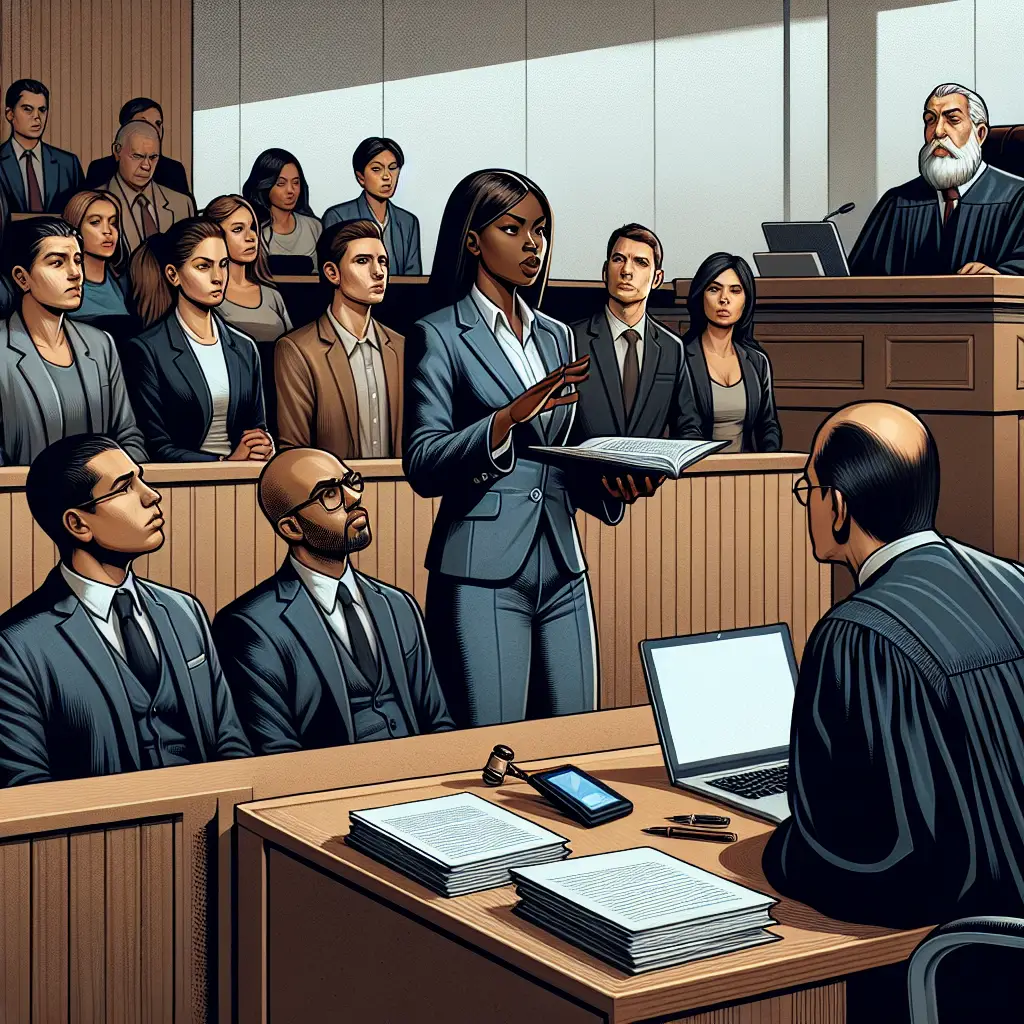
A federal court has denied the U.S. Department of Justice's (DOJ) request to reconsider its ruling in a Freedom of Information Act (FOIA) case. This decision affects the families of victims from two Boeing 737 MAX aircraft crashes, who are seeking records related to the crashes and the investigations that followed. The case highlights the ongoing struggle for transparency in government investigations, particularly those involving large corporations.
The case, Ryan v. United States Department of Justice, was filed in the District Court for the District of Columbia under Civil Action No. 2023-3815. The plaintiffs, led by Naoise Connolly Ryan, are family members of the crash victims. They filed the lawsuit after the DOJ failed to respond to their FOIA request for over a year. The families are seeking access to records that could shed light on the circumstances surrounding the crashes and the subsequent investigations.
The dispute centers on the DOJ's use of FOIA exemptions to withhold certain documents. The plaintiffs argue that the DOJ has not justified its claims that some records should remain secret. The case has been ongoing for nearly three years, with the parties engaging in discussions on how to process the large volume of records involved. The court previously ruled on cross-motions for summary judgment, addressing specific exemptions claimed by the DOJ.
In its recent ruling, Judge Sparkle L. Sooknanan stated that the DOJ's motion for reconsideration did not meet the necessary legal standards. The court clarified that under Federal Rule of Civil Procedure 54(b), a party can seek reconsideration of an interlocutory order only under specific circumstances, such as an intervening change in the law or the discovery of new evidence. The DOJ's arguments did not satisfy these criteria.
The court explained, "DOJ has not shown an intervening change in the law, the discovery of new evidence not previously available, or a clear error in the Court’s Memorandum Opinion." Judge Sooknanan emphasized that the DOJ's request seemed to be an attempt to gain another opportunity to present its case rather than a legitimate request for reconsideration based on new facts or legal standards.
The court specifically addressed the DOJ's claims regarding FOIA Exemptions 3 and 4, which the DOJ argued justified withholding certain records. Exemption 3 relates to records that are protected by other laws, while Exemption 4 pertains to trade secrets and confidential commercial information. The court found that the DOJ had failed to adequately justify its claims under these exemptions.
Regarding Exemption 3, the court noted that the DOJ did not provide sufficient evidence to demonstrate that the withheld records were connected to a grand jury investigation. The court stated, "DOJ entirely failed to supply the information a court must have in order to intelligently make that judgment." Similarly, concerning Exemption 4, the court found that the DOJ had not shown that the records in question were confidential or that their disclosure would cause foreseeable harm.
The court's ruling is significant as it reinforces the importance of transparency in government investigations, particularly in cases involving public safety and corporate accountability. The families of the crash victims have expressed their desire for access to these records, believing that the information is crucial for understanding the circumstances surrounding the tragedies and the government's response.
Moving forward, the ruling means that the DOJ is required to release the records that the court has determined are not exempt from disclosure. The court previously set a deadline for the DOJ to turn over the sample records that were deemed non-exempt. This decision could set a precedent for similar cases where families seek information related to government investigations into corporate actions.
The DOJ has the option to appeal the court's decision, but the court's ruling emphasizes the need for the agency to provide compelling reasons for withholding information under FOIA. The case highlights the ongoing battle for transparency and accountability in government actions, particularly in high-stakes situations involving public safety.
Details were not available in the court filing regarding whether there are any related cases pending that might impact this ruling. However, the outcome of this case could influence future FOIA requests and the government's approach to handling similar inquiries.
Read Next
 Court dismisses visa case after years of processing delays
 Court dismisses Klayman's claims against D.C. Court of Appeals
 Court rules on discrimination claims against Defense Dept.
 Nevada Supreme Court dismisses Callahan v. Liberty Mutual appeal
 Court affirms denial of survivor annuity benefits for Valdez
 Court dismisses Warren Fambro's appeal for lack of timeliness