



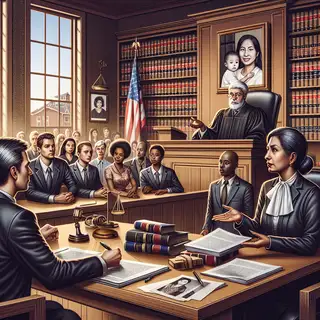







A U.S. District Court in Washington, D.C. ruled against Brenda Parker in her lawsuit against the District of Columbia Department of Human Services (DHS) regarding her Supplemental Nutrition Assistance Program (SNAP) benefits. The court's decision, issued on July 24, 2026, affects Parker's claims about the handling of her benefits and clarifies the legal responsibilities of government agencies in administering such programs.
The case, officially titled Parker v. Zeilinger, Civil Action No. 2025-1045, centers on Parker's allegations that she was wrongfully denied benefits and improperly overpaid due to the DHS's calculations. This ruling is significant as it highlights the challenges individuals face when navigating government assistance programs and the legal recourse available when disputes arise.
Background
Brenda Parker is the plaintiff in this case, and she filed her lawsuit against A.D. Rachel Pierre, the Interim Director of the DHS, and Mayor Muriel Bowser, both sued in their official capacities. The dispute began when Parker challenged the DHS's determination regarding her SNAP benefits for the years 2023 and 2024. She filed two appeals between November 2023 and January 2024, claiming that the DHS had made errors in calculating her benefits.
The situation escalated when an Administrative Law Judge (ALJ) ruled in favor of the DHS, stating that Parker had been overpaid in SNAP benefits after accounting for her retirement income. Following this ruling, Parker received her benefits in a corrected amount for several months. However, she failed to submit required income verification in August 2024, which led to further complications in her case.
The Ruling
The court ruled in favor of the defendants, granting their motion for summary judgment. Judge Amit P. Mehta stated that Parker did not contest the facts presented by the DHS, which led the court to treat them as undisputed. He noted, "Plaintiff provides neither the legal authority nor the factual basis for the court to reconsider any claims decided by the ALJ." This ruling means that Parker's claims were dismissed due to a lack of evidence and failure to demonstrate any ongoing injury related to her SNAP benefits.
Judge Mehta further explained that Parker's claims regarding policy, fraudulent misrepresentation, and retaliation lacked sufficient factual support to constitute a plausible claim for relief. The court concluded that Parker did not meet the necessary criteria to warrant additional discovery before the ruling, stating that her affidavit did not outline specific facts needed to oppose the motion for summary judgment.
Impact
This ruling has significant implications for individuals who rely on government assistance programs like SNAP. It underscores the importance of complying with documentation requirements and the challenges of contesting government agency decisions. The court's decision reinforces the notion that claimants must provide adequate evidence and legal arguments to support their claims against government entities.
Furthermore, this case sets a precedent regarding the responsibilities of claimants in administrative hearings and the expectations for legal representation. Individuals seeking to challenge government decisions must be prepared to present substantial evidence and articulate their claims clearly to avoid dismissal.
What's Next
Parker may appeal the court's decision, but details about any potential appeal were not available in the court filing. There are no related cases pending at this time.