











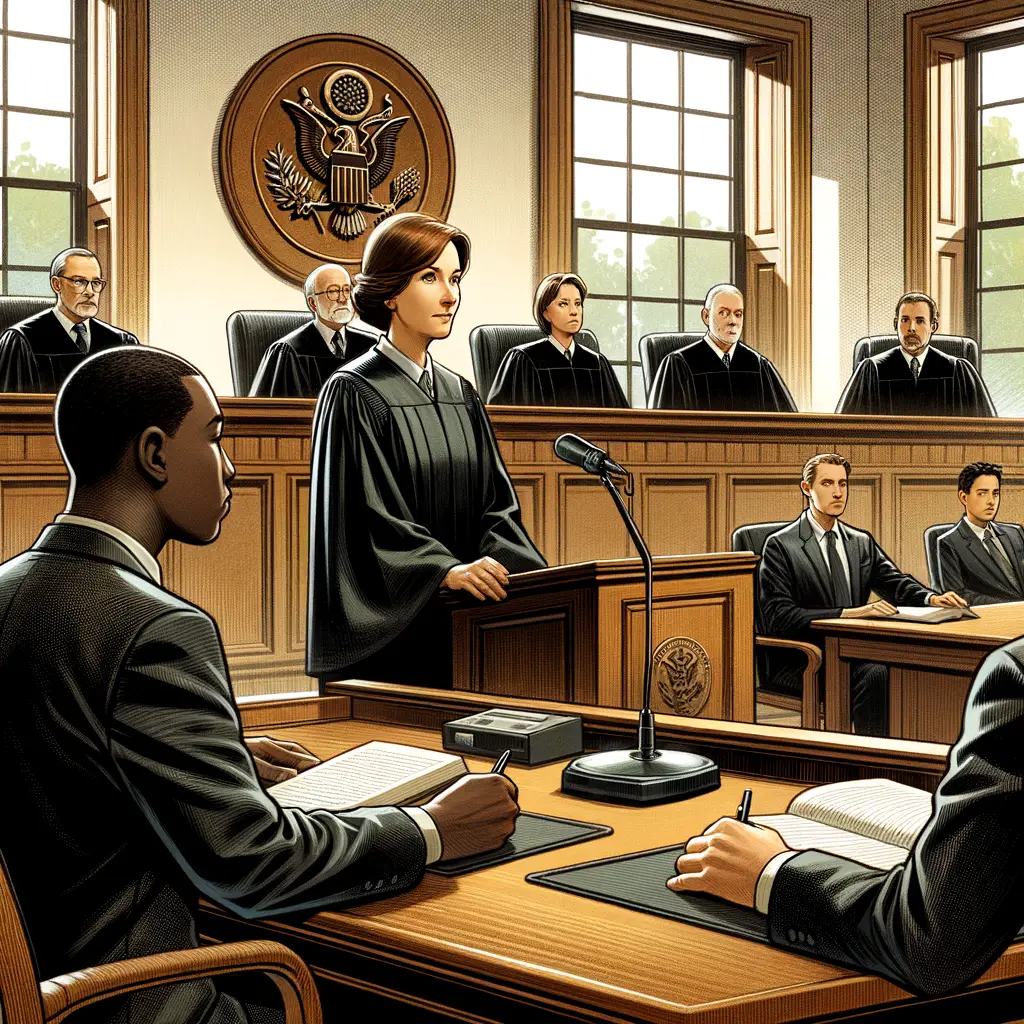
A Texas court has upheld a ruling against Eirevbenagie Obazee, a former employee at a State Supported Living Center, for neglecting his duties, which resulted in the tragic death of a resident. The ruling, made by the Texas Court of Appeals on October 1, 2026, confirms that Obazee's actions constituted reportable neglect under state law. This decision affects not only Obazee but also highlights the responsibilities of caregivers in state facilities.
The case arose when Obazee was responsible for providing one-to-one care for a resident, J.W., who had a complex medical history, including autism and schizophrenia. The ruling is significant as it emphasizes the importance of proper supervision in care settings and the consequences of failing to meet these obligations.
Background
Eirevbenagie Obazee worked as a direct support professional at the State Supported Living Center (SSLC) in Denton, Texas. His role involved caring for individuals with various disabilities, including J.W., a resident diagnosed with multiple mental health disorders and known to engage in self-injurious behavior. On February 23, 2020, Obazee was tasked with providing one-to-one supervision for J.W., which mandated that J.W. should not have privacy in the bathroom or bedroom due to his history of self-harm.
Despite being aware of J.W.'s needs and having signed a Level of Supervision (LOS) card that outlined his responsibilities, Obazee failed to maintain the required supervision. He delegated J.W.'s care to another staff member, Wendell Wood, without ensuring that Wood was properly trained or that J.W.'s LOS sheet was signed. This lack of supervision allowed J.W. to enter the bathroom alone, where he ultimately took a lethal dose of diphenhydramine, leading to his death.
The Ruling
The Texas Court of Appeals affirmed the decision made by the administrative law judge (ALJ) and the Health and Human Services Commission (HHSC), which found that Obazee's actions constituted reportable neglect. The ruling stated, "Substantial evidence supports the ALJ’s finding of reportable neglect," emphasizing that Obazee's failure to provide adequate supervision directly contributed to the tragic outcome.
The court noted that the ALJ had enough evidence to conclude that Obazee was aware of J.W.'s supervision requirements and still neglected his duties. The evidence included testimony from various witnesses and video footage of the incident, which showed that J.W. was left unsupervised for an extended period. The court also pointed out that the ALJ's decision was not arbitrary or capricious, as it was based on substantial evidence.
Impact
This ruling has significant implications for the future of care in state-supported facilities. It reinforces the necessity for caregivers to adhere strictly to supervision protocols, especially for individuals with complex needs. The decision also serves as a reminder of the potential consequences of neglect in such environments, which can lead to severe outcomes, including death.
Furthermore, the ruling could influence how similar cases are handled in the future, establishing a precedent that emphasizes accountability for caregivers. It highlights the importance of training and adherence to established care plans, which are crucial for the safety and well-being of vulnerable individuals.
What's Next
Obazee has the option to appeal the ruling, although details regarding any potential appeals were not available in the court filing. The case serves as a critical reminder of the responsibilities held by caregivers in state facilities and the serious consequences of failing to meet those responsibilities.