











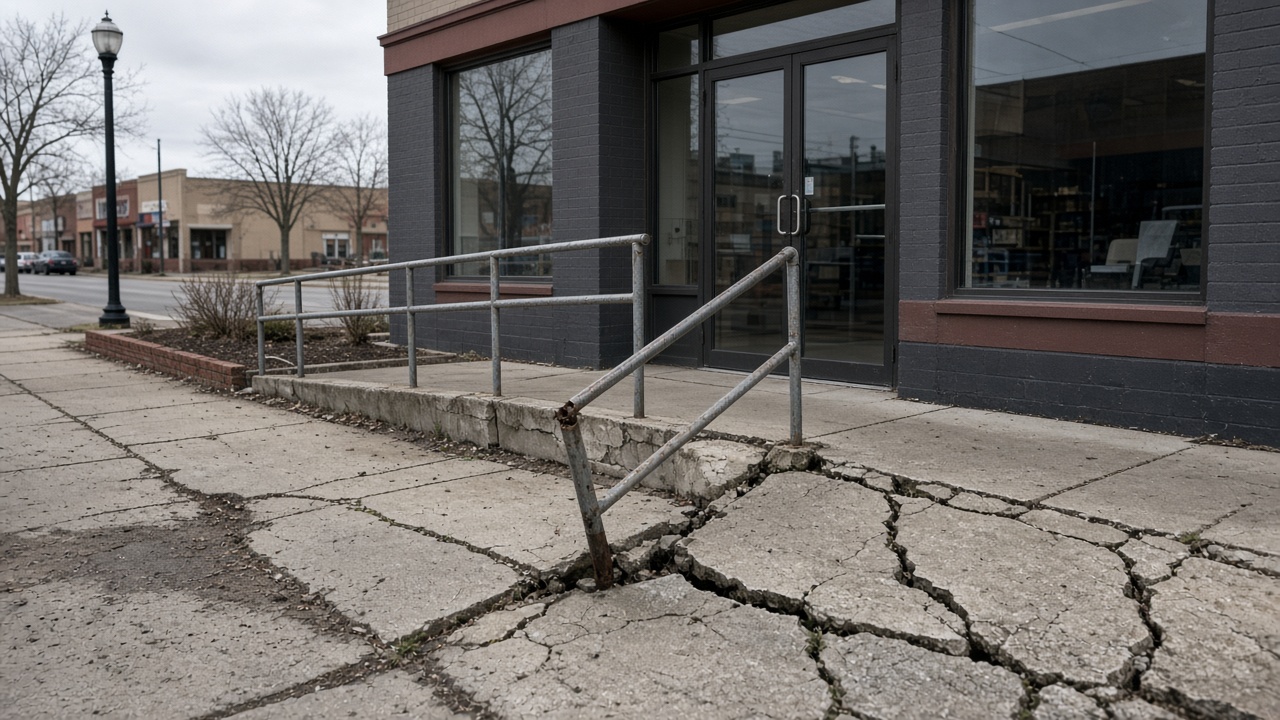
A Florida court has reversed a jury ruling in a premises liability case involving PGA National Resort and Spa and Lori Ginsburg. The court found that errors in judicial notice and the admission of outdated building code provisions led to a flawed trial. This decision impacts how premises liability cases are handled in Florida, particularly regarding the use of building codes in court.
The case centers around Ginsburg, who filed a lawsuit after tripping and falling in PGA's guest parking lot. The jury initially awarded her over $603,000 in damages. However, the court's ruling has now sent the case back for a new trial, affecting both parties involved.
Background
The dispute began when Lori Ginsburg and her husband were walking through the guest parking lot of PGA National Resort and Spa. Ginsburg tripped over a defect in the pavement, which was described as a missing section of asphalt. The defect was approximately six to eight inches long, four to six inches wide, and up to one inch deep. Due to the lack of sidewalks and overhead lighting that cast shadows, Ginsburg claimed she could not see the hazard.
In response to the incident, Ginsburg filed a lawsuit against PGA, alleging that the resort failed to maintain its property in a safe condition and did not warn guests about the dangerous situation. PGA denied liability and argued that Ginsburg was partially responsible for her injuries.
The case reached the District Court of Appeal of Florida after the trial court ruled in favor of Ginsburg, awarding her damages. PGA appealed the decision, challenging the trial court's denial of its motion for a directed verdict and the judicial notice of a section from the Florida Building Code (FBC).
The Ruling
The court ruled that the trial court had made significant legal errors. Specifically, it found that Ginsburg's request for judicial notice of the FBC section was improperly handled. The court stated, "the trial court erred as a matter of law in treating the FBC like a statute subject to mandatory judicial notice." The judges involved in the ruling were not specified in the opinion.
Additionally, the court highlighted that Ginsburg did not provide timely written notice of her request for judicial notice, which deprived PGA of the opportunity to prepare a defense. The court noted that the FBC section in question had expired in 2005 and was not applicable to the case at hand. The opinion emphasized that the FBC is an administrative rule, not a statute, and therefore should not have been treated as mandatory judicial notice.
Impact
This ruling has important implications for future premises liability cases in Florida. It underscores the necessity for parties to provide adequate notice and opportunities for opposing counsel to respond to requests for judicial notice. The court's decision also clarifies that outdated building codes cannot be used as evidence without proper context and applicability to the case.
The ruling may influence how courts handle similar cases moving forward, particularly regarding the admissibility of building codes and the procedural requirements for judicial notice. This case serves as a reminder that both parties must adhere to legal standards to ensure a fair trial.
What's Next
The case has been sent back for a new trial, where the issues raised by the appellate court will need to be addressed. It is unclear if PGA will seek further appeal on this ruling or if there are any related cases pending.
Read Next
 Florida court denies petition for writ of certiorari in case
 Florida court affirms decision in Adam Farney appeal case
 Florida court rules trustee must hire attorney for trust case
 Delaware Court Denies Motion to Dismiss Rancho Verde Case
 Hawaii Court Affirms Injunction Against Harassment Case
 Louisiana Court Denies Writ in Eviction Case Involving Lease