



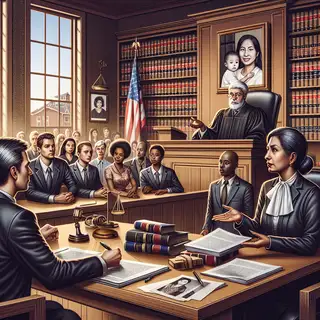








A Florida court recently ruled in favor of contractor Jessica Weigel Zakarian, who had her contractor licenses revoked and faced a $10,000 fine. The court found that the process leading to her punishment lacked a formal hearing, which is crucial for ensuring fairness in legal proceedings. This decision could have significant implications for how similar cases are handled in the future.
The case, filed under docket number 1D2026-0002, involved the Department of Business and Professional Regulation (DBPR), which oversees licensing for various professions, including contractors. Zakarian's appeal centered on her belief that the Construction Industry Licensing Board had improperly resolved disputed facts without giving her a proper opportunity to defend herself.
Zakarian's situation began when the Board revoked her contractor licenses. She argued that the Board's decision was based on unresolved issues and that she did not receive a fair chance to present her side. This led her to appeal the decision to the District Court of Appeal of Florida.
The court's ruling addressed Zakarian's concerns directly. It stated that the Department of Business and Professional Regulation had moved to relinquish jurisdiction for further proceedings. This motion indicated that the fine imposed on Zakarian exceeded the statutory limit and that she might not have received a meaningful opportunity to be heard during the initial proceedings.
In its opinion, the court said, "We treat the Department’s motion as a concession of error and accept that concession. We therefore set aside the final order and remand for further proceedings." This means that the court agreed with the Department's assessment that the previous ruling was flawed and needed to be reconsidered.
The judges on the panel, Rowe, Ray, and Winokur, all concurred with the decision to set aside the fine and remand the case for further proceedings. This ruling underscores the importance of due process in administrative hearings, particularly when significant penalties, such as license revocations and fines, are at stake.
The impact of this ruling extends beyond just Zakarian. It emphasizes the necessity for regulatory bodies to conduct fair hearings and adhere to legal standards when imposing penalties. The decision may encourage other individuals facing similar situations to appeal if they believe their rights to a fair hearing were violated.
Moving forward, this case could set a precedent for how the DBPR and other regulatory agencies handle disputes involving license revocations and fines. It highlights the critical nature of ensuring that all parties have a fair opportunity to present their cases and that any penalties imposed are within legal limits.
As for what’s next for Zakarian, the case has been remanded, meaning it will return to the lower court for further proceedings. This gives her another chance to contest the Board's decision and potentially avoid the penalties that were initially imposed. There is no indication in the court filing that this case will be appealed further at this time, but it remains to be seen how the lower court will handle the new proceedings.