

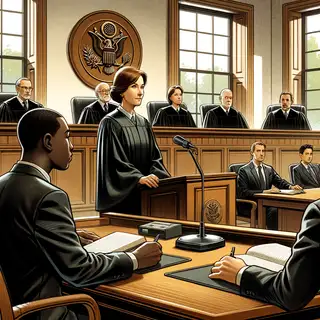










Aaron Shaw, a convicted sexual predator, will remain civilly committed after a Florida court upheld a lower court's ruling. The Third District Court of Appeal's decision on August 26, 2026, affects Shaw's future and the interpretation of the Jimmy Ryce Act, which governs the civil commitment of sexually violent predators in Florida.
The case, docket number 3D2024-1934, centers on Shaw's appeal against a trial court order from October 17, 2024. The court found that Shaw failed to demonstrate probable cause that his condition had changed, making it safe for him to be released from his civil commitment. This ruling is significant as it reinforces the standards set by the Jimmy Ryce Act for individuals seeking release from civil commitment.
Background
Aaron Shaw has a long history of violent sexual offenses. He was first charged with sexual battery in 1985 and later convicted of sexual assault with a weapon and kidnapping in 1988. Following these convictions, Shaw exhibited violent behavior while incarcerated, including multiple assaults on corrections officers. His civil commitment began in 2008 after the state deemed him a sexually violent predator under the Jimmy Ryce Act.
The Jimmy Ryce Act allows for the civil commitment of individuals deemed sexually violent predators, requiring them to prove that they are no longer a danger to society before being released. Shaw's commitment has been reviewed annually, and he has the right to petition the court for a probable cause hearing to assess whether he can be safely released.
In April 2024, Shaw underwent an evaluation by Dr. Melanie Mercado, who reported that he had not participated in treatment programs and had a history of behavioral issues. Dr. Mercado concluded that Shaw needed further treatment to avoid reoffending. Shaw was then evaluated by Dr. Amy Swan, who confirmed Shaw's dangerousness and stated that he continues to meet the criteria for civil commitment.
The Ruling
The court ruled that Shaw's appeal lacked merit and affirmed the trial court's decision. The judges noted that Shaw had been given due process and that the trial court's order was supported by competent and substantial evidence. The opinion stated, "Shaw continues to meet the criteria for civil commitment as a sexually violent predator."
Additionally, the court dismissed Shaw's petition for a writ of certiorari, stating it lacked jurisdiction to review the order because the alleged harm could be remedied through an appeal. The ruling emphasized that Shaw had the opportunity to present evidence at the hearing, but he failed to do so effectively.
Impact
This ruling has significant implications for individuals under civil commitment in Florida. It reinforces the standards required for release under the Jimmy Ryce Act and clarifies the process for challenging civil commitments. Shaw's case illustrates the challenges faced by individuals seeking release, especially when there is substantial evidence of their ongoing dangerousness.
The decision also serves as a reminder of the importance of expert evaluations in civil commitment cases. The court relied heavily on the findings of Dr. Mercado and Dr. Swan, which played a crucial role in affirming Shaw's commitment. This case may influence future civil commitment hearings and the standards for demonstrating a change in condition.
What's Next
Shaw may seek further legal recourse, including the possibility of appealing the ruling to a higher court. However, details regarding any potential related cases or appeals were not available in the court filing.