











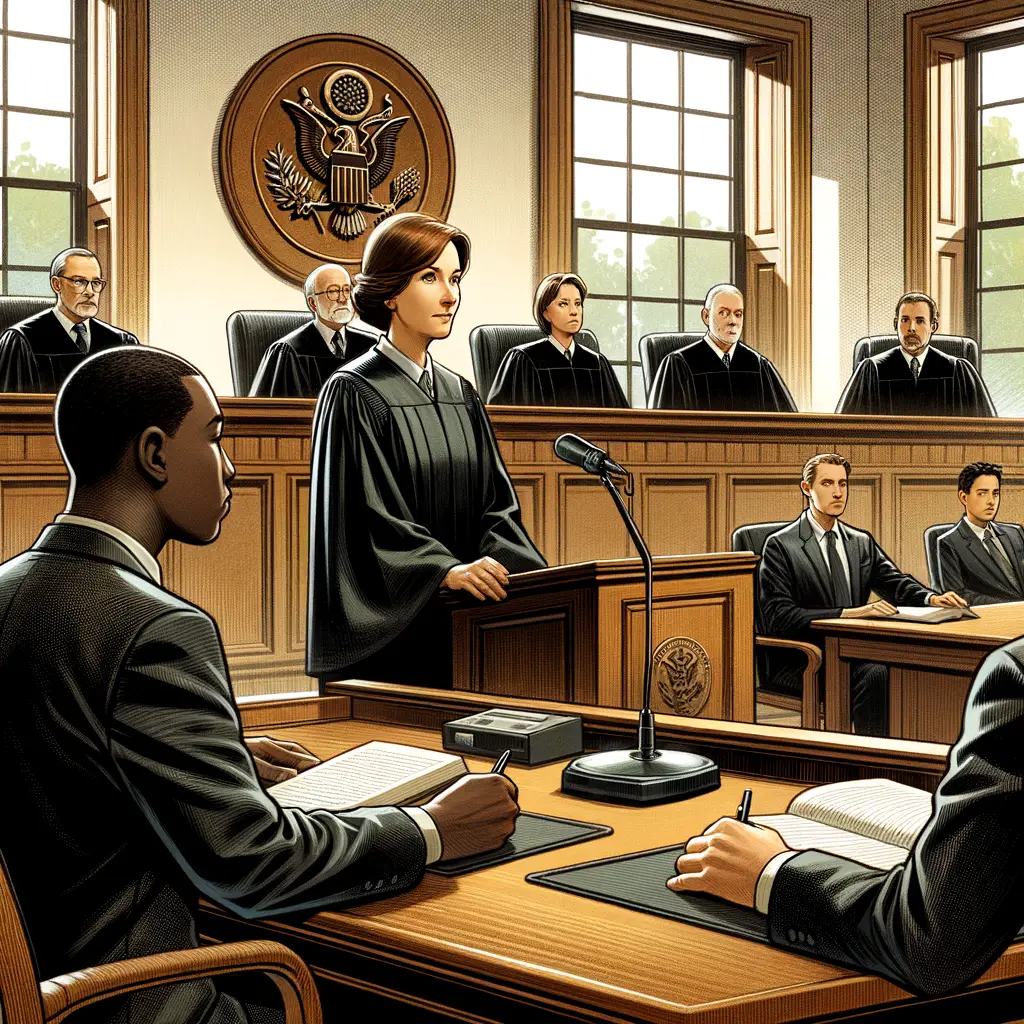
The Nebraska Supreme Court recently upheld a lower court's ruling that protects state retirement benefits from being used to satisfy a civil judgment. This decision affects individuals seeking to collect on judgments against former state employees, particularly in cases involving serious criminal actions.
The case, J.M. v. Hobbs, was filed under docket number S-10-600. In this case, J.M., the guardian of a minor child, sought to collect a $325,000 judgment against Billy L. Hobbs, a former state trooper convicted of sexually assaulting J.M.'s minor child. J.M. argued that Hobbs was receiving retirement benefits from the Nebraska State Patrol and that these funds should be available to satisfy the judgment.
The dispute arose after Hobbs was convicted of first-degree sexual assault and sentenced to 25 to 30 years in prison. Following the conviction, J.M. filed a motion for an order in aid of execution, which would allow him to collect the judgment from Hobbs' retirement benefits. However, the district court ruled against J.M., stating that Hobbs' retirement benefits were exempt from collection under Nebraska law.
J.M. appealed the district court's decision, which led to the Nebraska Supreme Court's review. The main legal question was whether the retirement benefits Hobbs received were exempt from garnishment or other legal processes to satisfy a judgment.
The Nebraska Supreme Court examined the relevant statutes, particularly the Nebraska State Patrol Retirement Act, which states that benefits are not subject to garnishment or any legal process. The court noted that while J.M. argued that Hobbs did not need his retirement funds for support due to his incarceration, the law clearly protects those benefits.
The court ruled, "The language of § 81-2032 clearly provides greater protection to benefits under the Act than does the general pension exemption set forth in § 25-1563.01."
The court affirmed the lower court's ruling, stating that the anti-attachment provisions are designed to protect retirement benefits from being used to satisfy debts, even in cases of serious criminal conduct. The justices emphasized that any change to this legal protection would need to come from the legislature, not the courts.
The ruling has significant implications for victims seeking restitution from perpetrators who receive retirement benefits. It reinforces the legal protections surrounding retirement funds, highlighting the challenges that victims may face in collecting judgments. The court's decision indicates that, regardless of the circumstances, retirement benefits remain protected under Nebraska law.
This ruling may set a precedent for future cases involving attempts to collect on judgments against individuals receiving retirement benefits. It clarifies the limits of what creditors can pursue in terms of a debtor's assets, particularly in cases involving serious crimes.
Looking ahead, it is unclear whether J.M. will seek to appeal this decision further. The Nebraska Supreme Court's ruling may stand unless new legal grounds arise or if the legislature decides to amend the existing laws regarding the garnishment of retirement benefits.
Read Next
 Nebraska Court of Appeals upholds plea in kidnapping case
 Nebraska Court affirms sexual assault conviction, reverses obscenity ruling
 Court rules on workers' compensation payment timing
 Court affirms bankruptcy claims against BL Santa Fe, LLC
 Hawaii Court Upholds Deutsche Bank Foreclosure Ruling
 Arizona court affirms order of protection in custody case