





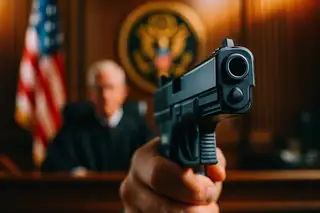





The New Jersey Supreme Court has ruled that defendants must present expert testimony to receive a jury instruction on diminished capacity in criminal cases. This decision, made on August 3, 2026, affects how mental health issues are addressed in the courtroom, particularly in cases involving serious charges like murder.
The case involved Kader S. Mustafa, who was convicted of first-degree murder after fatally shooting Sciasia Calhoun in May 2018. Mustafa's defense argued for a diminished capacity jury instruction based on his alleged mental health issues. However, the trial court denied this request due to the absence of expert testimony. The ruling by the Supreme Court of New Jersey clarifies that without expert evidence linking a defendant's mental state to their actions, juries cannot consider diminished capacity as a defense.
Background
Kader S. Mustafa was indicted in July 2018 on multiple charges, including first-degree murder, after a violent incident on Route 33. The events unfolded when Mustafa, driving with his girlfriend, became agitated with Calhoun, who had her high beams on. Following a confrontation, Mustafa shot Calhoun, who later died from her injuries. The trial included testimony from his girlfriend, Nicole Fiore, who described Mustafa's erratic behavior and mental health struggles.
During the trial, the defense raised the issue of diminished capacity, suggesting that Mustafa's mental state at the time of the shooting impaired his ability to form the intent necessary for murder. However, the trial court ruled that without expert testimony to substantiate claims of mental illness or defect, the jury could not receive instructions regarding diminished capacity. This led to Mustafa's conviction on all counts.
Mustafa appealed the decision, arguing that the trial court's refusal to provide a diminished capacity instruction was a reversible error. The Appellate Division upheld the trial court's decision, stating that expert testimony was necessary for such an instruction, which ultimately brought the case before the New Jersey Supreme Court.
The Ruling
The New Jersey Supreme Court, in a unanimous opinion delivered by Justice Pierre-Louis, affirmed the Appellate Division's ruling. The court held that expert testimony is required for a defendant to invoke the diminished capacity defense and for the trial court to instruct the jury on that defense. The court emphasized that without expert evidence, jurors might resort to stereotypes and assumptions regarding mental illness instead of relying on reliable evidence.
“Without psychological or psychiatric expert testimony, jurors may resort to stereotypes and assumptions about mental illnesses instead of reliable evidence,” the court stated.
The court further explained that lay testimony, while admissible, cannot replace the need for expert insights into complex mental health issues. The ruling establishes a clear precedent that defendants must provide expert testimony linking their mental state to their capacity to commit the charged offense.
Impact
This ruling has significant implications for future criminal cases in New Jersey. It reinforces the necessity for defendants to present expert testimony when claiming diminished capacity, effectively making it more challenging for defendants to argue this defense without professional validation of their mental health claims. This decision aligns with existing legal standards that require expert testimony for complex matters that jurors may not fully understand.
Additionally, this ruling could influence how defense attorneys strategize in cases involving mental health issues. The requirement for expert testimony may lead to increased costs and preparation time for defense teams, as they will now need to secure expert witnesses to support claims of diminished capacity. This could also affect the overall dynamics of plea negotiations, as defendants might be less likely to pursue diminished capacity defenses without the necessary evidence.
What’s Next
Following this ruling, it remains to be seen whether Mustafa will seek further legal recourse, such as a potential appeal to a higher court or seeking post-conviction relief based on the court's interpretation of diminished capacity. The ruling does not preclude future challenges to the necessity of expert testimony in other contexts, and it may prompt discussions about the broader implications of mental health defenses in criminal law.