


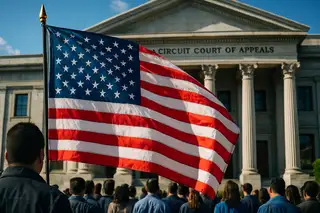









In a significant ruling, the Texas Court of Appeals has dismissed a lawsuit filed by Esmeralda Espinosa against Yoder Ford, Inc. The court found that Espinosa's claims related to her husband's COVID-19 death did not meet the legal requirements for expert testimony. This decision could impact similar personal injury claims arising from the pandemic.
The case, Yoder Ford, Inc. v. Esmeralda Espinosa, was filed in the 92nd District Court of Hidalgo County, Texas, under docket number 13-25-00368-CV. The court ruled on August 13, 2026, stating that the expert report provided by Espinosa was insufficient. This ruling is crucial as it sets a precedent for how courts may handle pandemic-related negligence claims in the future.
Background
Esmeralda Espinosa filed her lawsuit against Yoder Ford after the death of her husband, Edgar Espinosa, who worked at the company during the COVID-19 pandemic. She alleged that Yoder Ford failed to implement safety measures to protect employees from the virus, leading to her husband's illness and eventual death on August 4, 2020.
Espinosa claimed that Yoder Ford remained open during the pandemic despite government orders to shut down non-essential businesses. She alleged that the dealership did not provide adequate personal protective equipment (PPE) or enforce safety protocols, which contributed to her husband's exposure to COVID-19. After filing her lawsuit, she submitted an expert report authored by Dr. Lawrence S. Mayer, which she believed would support her claims.
Yoder Ford responded by challenging the sufficiency of Dr. Mayer's report, arguing that it lacked a factual and scientific basis. The trial court initially denied Yoder's motion to dismiss, but the case was appealed, leading to the recent ruling by the Texas Court of Appeals.
The Ruling
The Texas Court of Appeals, led by Justice Clarissa Silva, ruled that the trial court had abused its discretion in denying Yoder's motion to dismiss. The court found that Dr. Mayer's expert report did not meet the legal requirements set forth in the Texas Pandemic Liability Protection Act (PLPA). The court stated, "We hold that the trial court abused its discretion in determining that Dr. Mayer’s amended report represented an objective, good faith effort to provide a factual and scientific basis for Dr. Mayer’s assertion that Yoder’s failure to act caused Edgar to contract a pandemic disease."
The court emphasized that the expert report failed to adequately explain how Yoder's alleged failures directly caused Edgar Espinosa to contract COVID-19. The ruling reversed the trial court's decision, rendering judgment dismissing Espinosa's claims against Yoder with prejudice, meaning she cannot refile the same claims.
Impact
This ruling has significant implications for future personal injury claims related to COVID-19. It underscores the importance of providing a sufficient expert report that meets the legal standards required by the PLPA. The court's decision may deter similar lawsuits against businesses that remained open during the pandemic, as plaintiffs will need to ensure they can provide adequate expert testimony to support their claims.
Furthermore, the ruling reinforces the legal protections afforded to businesses under the PLPA, which was enacted to shield them from liability for claims arising from pandemic-related exposures. This case may serve as a reference point for other courts in Texas and potentially influence how similar cases are handled in the future.
What's Next
Esmeralda Espinosa may consider appealing the ruling to a higher court, but details on any potential appeal were not available in the court filing. As of now, the decision stands, and Yoder Ford is entitled to seek reasonable attorney's fees and costs as determined by the court.