





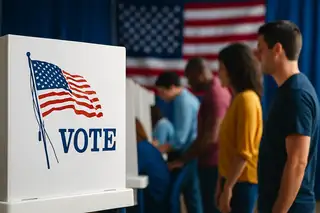



A federal court has issued a ruling that blocks a controversial mail-in ballot rule introduced by the Trump administration. The decision comes just weeks before the upcoming federal elections and affects how absentee and mail-in ballots are processed and delivered. This ruling is significant as it aims to protect voters' rights and ensure the integrity of the electoral process.
The case, known as DSCC v. Trump (Civil Action No. 2026-1114), was filed in the District Court for the District of Columbia. The court's ruling impacts various organizations, including the Democratic Senatorial Campaign Committee (DSCC), the League of United Latin American Citizens (LULAC), and the National Association for the Advancement of Colored People (NAACP), all of which challenged the new regulations. The court's decision is crucial because it addresses concerns about potential voter disenfranchisement and the integrity of mail-in voting.
Background
The dispute began after President Trump issued Executive Order No. 14,399 on March 31, 2026. This order aimed to enhance citizenship verification and integrity in federal elections. It directed the United States Postal Service (USPS) to create new regulations for absentee and mail-in voting, which included specific design requirements for ballot envelopes and a new enrollment system for voters.
On June 2, 2026, the USPS published a Notice of Proposed Rulemaking, followed by a Final Rule on August 21, 2026. This rule mandated that all mail-in ballots conform to new design specifications and be sent only to voters verified through a newly established Federal Ballot Mail Portal. The plaintiffs quickly filed their complaints, arguing that the Postal Service lacked the authority to implement these changes and that the new rules would likely lead to confusion and disenfranchisement of voters.
The Ruling
In its opinion, the court ruled in favor of the plaintiffs, stating that they were likely to succeed on their claims that the USPS's actions were beyond its legal authority, or ultra vires. Judge Carl J. Nichols wrote, "The Postal Service could issue (and enforce) the Rule only if Congress gave it the authority to do so, but here no statute grants the Postal Service the power to issue key parts of the Rule."
The court granted the plaintiffs' renewed motions for preliminary injunction, effectively blocking the implementation of the new mail-in ballot regulations. The ruling highlighted that the plaintiffs had demonstrated a likelihood of success on the merits of their case and that they would suffer irreparable harm without the injunction.
Impact
This ruling is expected to have significant implications for the upcoming federal elections. By blocking the new mail-in ballot rule, the court has ensured that voters will not face additional hurdles when casting their ballots. This decision also reinforces the importance of protecting voting rights and maintaining the integrity of the electoral process.
The ruling may set a precedent for future challenges to similar regulations that could disenfranchise voters or impose undue burdens on the voting process. It underscores the judiciary's role in safeguarding electoral integrity and ensuring that voters have access to fair and equitable voting methods.
What's Next
The Trump administration may seek to appeal the court's decision, but details on any potential appeal were not available in the court filing. Meanwhile, related cases challenging the executive order and the USPS's authority to enact such regulations may also be pending in other jurisdictions.