









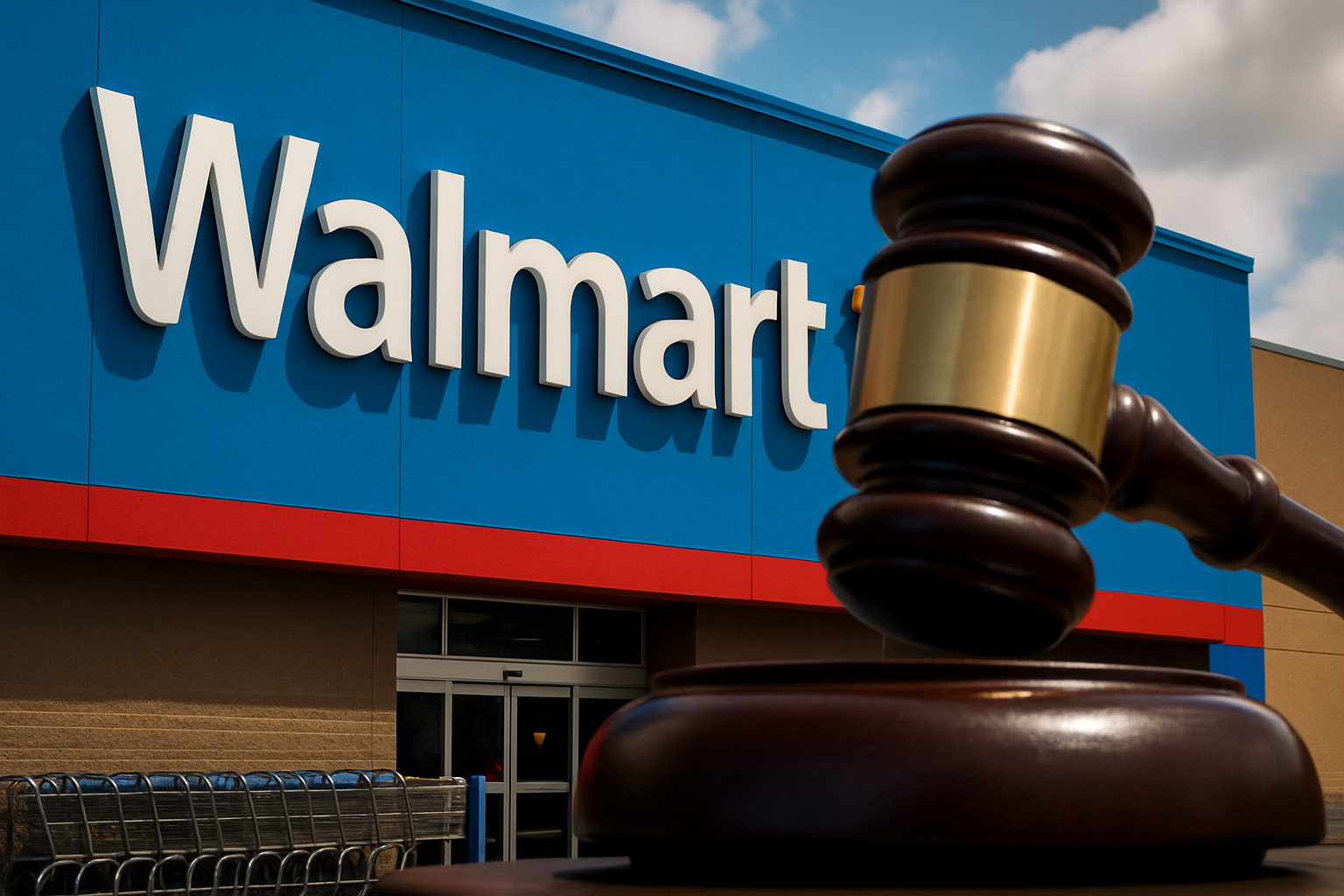
The Iowa Court of Appeals recently upheld a decision regarding the property valuation of a Walmart supercenter in Indianola, Iowa. This ruling affects how big-box retail properties are assessed in the state and could have implications for similar businesses in the future.
The case, Walmart, Inc. and Wal-Mart Stores, Inc. v. Warren County Board of Review, was filed on June 24, 2026, under docket number 25-0988. Walmart contested the Warren County Assessor's 2023 valuation of its 189,108-square-foot supercenter, which was set at $11,274,200. Walmart argued that the property was worth two to three million dollars less than the assessed value.
The dispute centered around the methodology used by the assessor to determine the property’s market value. Walmart claimed that the assessor's approach failed to accurately reflect the unique market conditions for owner-occupied, big-box retail properties. The case was heard alongside another appeal involving Walmart's valuation in Ames, Iowa, where similar arguments were made regarding the sales-comparison analysis used by an expert witness.
In both cases, Walmart challenged the appraisal methods of Mark Kenney, an expert who testified in support of the assessor's valuations. Walmart argued that Kenney's approach did not comply with Iowa law because he did not subtract the independent value added by leases when valuing Walmart’s owner-occupied stores. The court's opinion in the Ames case rejected this theory, stating that Iowa Code section 441.21 does not require an assessor to remove the independent value of a lease as long as the comparable sale is adjusted for price-distorting attributes.
In the Indianola case, the court found that Kenney's methodology was appropriate for valuing big-box retail properties as going concerns. The court stated, “Kenney sought to adjust the prices of his comparable sales to the extent he believed they were distorted by advantageous or disadvantageous lease terms.” This adjustment was deemed compliant with the requirements of the law.
Walmart also raised concerns about the specific adjustments made by Kenney, arguing that they did not ensure an apples-to-apples comparison. The company claimed that Kenney used faulty statistics for location adjustments, relied on questionable data for lease comparisons, misinterpreted retail trends, and applied arbitrary adjustments for property age and condition. The district court found some of Kenney’s adjustments questionable but ultimately sided with his overall valuation approach.
The court noted that property valuation is not merely a mathematical exercise and often involves weighing competing expert opinions. The district court found that Kenney’s approach “more credibly and accurately” estimated the market value of Walmart’s property. The court stated, “Weighing the competing testimony of Walmart’s experts—whose own assumptions and inconsistencies were exposed on cross-examination—the district court found that Kenney’s approach ‘more credibly and accurately’ estimated the market value of Walmart’s property.”
As a result, the Iowa Court of Appeals affirmed the district court's decision, maintaining the assessed value of $11,274,200. The ruling emphasizes the importance of expert testimony in property valuation disputes and reflects the challenges faced by businesses in contesting property assessments.
This ruling has significant implications for Walmart and potentially other retailers in Iowa. It sets a precedent for how property assessments for big-box retailers may be conducted in the future. The court's decision reinforces the notion that assessors can use comparable sales data without removing the value of leases, as long as adjustments are made to account for market conditions.
Looking ahead, Walmart could consider appealing this decision to the Iowa Supreme Court, although details regarding any potential appeal were not available in the court filing. The outcome of this case may influence similar disputes involving property valuations across the state and could lead to changes in how assessments are approached in the future.