



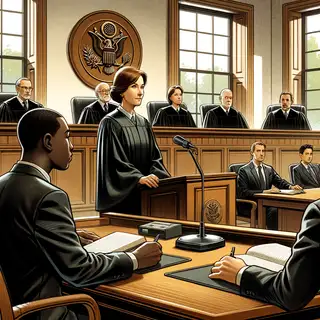







The Ohio Court of Appeals recently upheld a lower court's decision against Jorden L. Mumaw, who defaulted on a car loan from Dynamic Federal Credit Union. The court ruled in favor of the credit union, affirming that Mumaw owed $19,305.40 under the terms of a Loan and Security Agreement. This case highlights the importance of adhering to loan agreements and the legal ramifications of defaulting on such agreements.
The dispute began when Mumaw executed a Loan and Security Agreement with Dynamic on May 31, 2022, for the purchase of a 2017 Mercedes Benz GLA250. The loan was for $26,632.73, with an interest rate of 7.633 percent over 72 months. The vehicle served as collateral for the loan. According to the agreement, if Mumaw failed to make payments on time, he would be considered in default, allowing Dynamic to demand immediate payment of the entire balance and take possession of the vehicle.
After Mumaw defaulted on the loan, Dynamic filed a complaint on August 8, 2025, seeking the outstanding balance of $19,305.40. Mumaw, who represented himself in court, acknowledged his default in a letter but did not provide any legal defenses against the credit union's claim. He stated that his incarceration since February 2024 limited his ability to pay.
Dynamic moved for summary judgment on September 16, 2025, providing evidence of the loan agreement, an affidavit from a credit union representative, and documentation of the vehicle's repossession and sale. The court granted summary judgment on October 3, 2025, finding no genuine issues of material fact and ruled in favor of Dynamic.
Mumaw later filed a memorandum opposing the summary judgment, claiming the sale price of the vehicle was too low and that he had not received adequate documentation regarding the sale. However, the trial court deemed his objections moot since the judgment had already been entered.
The Ohio Court of Appeals, led by Judge Robert A. Hendrickson, reviewed the case and found that the trial court's decision to grant summary judgment was appropriate. The court noted that Mumaw's arguments regarding the timing of the judgment and the evidence presented were insufficient to overturn the ruling. The court stated, "Upon the evidence provided, the court finds no genuine issues as to any material fact. Plaintiff is entitled to Summary Judgment as a matter of law."
The court also addressed Mumaw's concerns about due process, stating that the trial court's premature ruling was considered harmless error because Mumaw had not presented any defenses to the credit union's claims. The court emphasized that the evidence submitted by Dynamic demonstrated that Mumaw was indeed in default and owed the outstanding balance.
This ruling serves as a reminder of the legal obligations borrowers have under loan agreements. It underscores the importance of timely payments and the consequences of defaulting on a loan. The court's decision also reinforces the standard for summary judgment, which allows courts to rule in favor of a party when there are no genuine disputes about material facts.
Moving forward, this case may influence similar disputes involving loan defaults and the enforcement of loan agreements. Borrowers should be aware of their rights and obligations when entering into such agreements, as failure to comply can lead to significant financial consequences.
As for what’s next, Mumaw has the option to appeal the ruling to a higher court, although details about any potential appeal were not available in the court filing. The case highlights the ongoing legal challenges faced by individuals who default on loans, particularly in circumstances that may limit their ability to fulfill their financial obligations.