



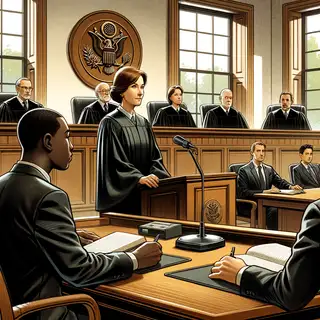








In a recent ruling, the U.S. District Court for the District of Columbia dismissed a case brought by James Vale against the Department of Veterans Affairs (VA) regarding back pay calculations. The court determined it lacked the jurisdiction to hear the case, which stems from allegations of miscalculated compensation owed to Vale following his termination from the VA. This decision affects Vale and potentially other veterans seeking similar claims against the government.
The case, Vale v. Department of Veterans Affairs, was filed on September 28, 2026, under Civil Action No. 2025-2663. Vale, a former Supervisory Senior Counsel at the VA's Board of Veterans' Appeals, alleged that he was subjected to discrimination and a hostile work environment due to his disability, which led to his termination in 2016. After a lengthy administrative process, the Equal Employment Opportunity Commission (EEOC) found that Vale had indeed faced discrimination and ordered the VA to calculate his back pay.
Vale's dispute began after he received a back pay check of $306,591 on June 13, 2024, without an explanation of how the amount was calculated. He later filed a petition for enforcement, claiming the VA's calculations were incorrect. Vale alleged that the VA had underreported his income to the Social Security Administration and failed to apply certain deductions correctly. After the VA provided documentation supporting their calculations, Vale filed his complaint in August 2025, seeking a recalculation of his back pay.
Judge Emmet G. Sullivan presided over the case. In his ruling, he granted the VA's motion to dismiss, stating that the court lacked subject matter jurisdiction to hear Vale's claim. The court explained that the Back Pay Act does not provide independent jurisdiction for federal district courts and that claims seeking monetary relief from the government fall under the Tucker Act. Vale's claim was deemed to seek more than $10,000, which requires that it be heard in the United States Court of Federal Claims.
The court ruled, "Because the Tucker Act applies, the Court of Federal Claims has exclusive jurisdiction to hear Mr. Vale’s claim, and this Court lacks subject-matter jurisdiction."
Vale's case illustrates the challenges veterans may face when seeking compensation through federal courts. The ruling emphasizes the importance of understanding the jurisdictional limits of different courts when filing claims against the government. The decision also highlights the complexities involved in navigating the legal system for veterans who believe they have been wronged.
Looking forward, this ruling may set a precedent for similar cases involving veterans and their claims against the VA. It underscores the necessity for veterans to be aware of the specific legal avenues available to them, especially regarding monetary claims. The ruling could impact how future claims are filed and where they are adjudicated, potentially leading to an increase in cases being directed to the Court of Federal Claims.
As for what's next, Vale may have the option to appeal the ruling, but details were not available in the court filing. There could also be related cases pending, as other veterans may be facing similar issues with back pay calculations and jurisdictional challenges.