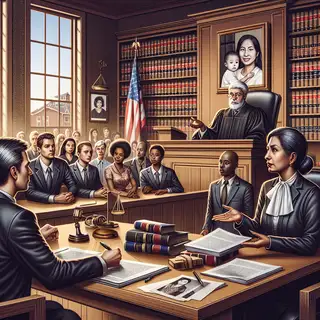











A federal court has ruled on a significant discrimination case involving Jacqueline Jackson, who alleged violations of her civil rights against the District of Columbia and two individuals. The court's decision will impact how similar cases are handled in the future, particularly regarding workplace rights and protections against harassment.
In the case of Jackson v. District of Columbia, Civil Action No. 2025-0302, filed in the District Court for the District of Columbia, Ms. Jackson claimed she faced sexual harassment, racial discrimination, and retaliation while working in the D.C. public school system. This case is particularly important as it highlights the challenges individuals face when seeking justice for workplace discrimination.
Jacqueline Jackson, a Black woman with disabilities, began her career in education at CentroNia before joining the D.C. public school system in 2014. She worked at Marie Reed Elementary School, where she alleged that she was sexually harassed by a colleague, Doris Peña. Jackson claimed that Peña had a history of inappropriate behavior, which culminated in incidents in March 2023 where Peña allegedly assaulted her. Jackson reported these incidents to her principal, Katie Lundgren, but felt her concerns were not adequately addressed.
In addition to her harassment claims, Jackson alleged that she faced racial and disability discrimination. After suffering injuries that required accommodations, she was transferred to a more demanding position, which exacerbated her condition. Following her complaints about harassment and discrimination, Jackson claimed she was retaliated against, leading to her eventual termination.
The court considered various motions, including the defendants' motion to dismiss Jackson's complaint. The court granted some parts of the motion, specifically dismissing several of Jackson's claims against the individual defendants, stating that Title VII and other statutes do not allow for individual liability. Judge Emmet G. Sullivan presided over the case, and his ruling emphasized the importance of proper legal procedures in discrimination claims.
The court ruled, "Ms. Jackson has not pled sufficient facts to show that respondeat superior liability plausibly exists," indicating that the school district had responded adequately to her complaints.
However, the court also dismissed several of Jackson's claims, including those related to disability harassment and retaliation, stating that she failed to provide sufficient evidence or legal arguments to support them. This ruling underscores the necessity for plaintiffs to clearly articulate their claims and provide adequate evidence when pursuing discrimination cases.
The impact of this ruling is significant as it sets a precedent for how discrimination cases may be handled in the future. It highlights the challenges that employees face when trying to prove their claims, particularly when it comes to individual liability and the standards of evidence required. The court's decision may deter some individuals from pursuing similar claims if they feel that the legal standards are too high or that their cases may be dismissed on technical grounds.
Looking ahead, Jackson has the option to appeal the court's decision. An appeal could potentially lead to a reconsideration of the dismissed claims, especially if new evidence or legal arguments can be presented. This case also raises questions about the protections available to employees in the District of Columbia and how effectively those protections are enforced.