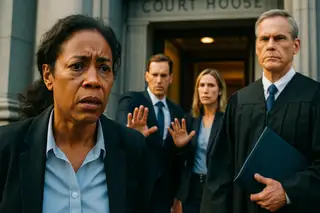











In a significant ruling, the Eleventh Circuit Court of Appeals addressed a case involving workplace discrimination based on hairstyle. The court's decision affects not only the plaintiff, Davita Key, but also raises important questions about grooming policies in workplaces across the United States. The case highlights the intersection of race and personal expression in professional settings.
Davita Key, a Black woman, alleged that her employer, Dynamic Security, Inc., discriminated against her because she wore her hair in dreadlocks, a style commonly associated with her cultural identity. After a jury awarded her over $800,000 in damages for retaliation, the Eleventh Circuit reviewed the case, focusing on the legality of Dynamic's grooming policies and the procedural aspects of Key's claims. The court's ruling could set a precedent for how similar cases are handled in the future.
Background
The dispute began when Key applied for a position at Dynamic Security, which provides security services at the Hyundai Motor Manufacturing Alabama (HMMA) plant in Montgomery. During her interview, Key was warned that her locs might be a problem. Despite this, she was hired. However, on her first day, she was sent home due to her hairstyle, which violated Dynamic's grooming policy prohibiting locs.
Key's experience escalated when she was told that her hair was an issue due to preferences from management at Hyundai. After being sent home, she filed a complaint alleging racial discrimination and retaliation. The case moved through the legal system, with Key initially filing charges with the Equal Employment Opportunity Commission (EEOC) and later taking her case to court.
The Ruling
The Eleventh Circuit Court, in its ruling, affirmed some aspects of the district court's decisions while reversing others. The court upheld the jury's award of $811,264 in damages against Dynamic Security for Key's retaliation claim. However, it found that the district court had made errors regarding Key's Title VII claims, specifically regarding the presumption that she had received her right-to-sue letter from the EEOC.
The court ruled, "the district court abused its discretion when it did not instruct the jury to determine whether Dynamic Security discriminated against Key on the basis of her race."
Furthermore, the court determined that Key had provided sufficient evidence to challenge the presumption that she received the right-to-sue letter, which had led to the dismissal of her Title VII claims. The ruling stated that the jury must now determine the date Key was on notice of her right to sue Dynamic.
Impact
This ruling has significant implications for workplace policies regarding grooming and discrimination. It highlights the need for employers to ensure that grooming policies do not disproportionately affect employees based on race or cultural identity. The court's decision reinforces the idea that personal expression, including hairstyles, should not be a basis for discrimination in the workplace.
Moreover, the case may encourage other employees facing similar discrimination to come forward, knowing that the courts are willing to examine the nuances of such claims. The ruling could also influence how companies draft and enforce grooming policies, prompting a reevaluation of practices that may be seen as discriminatory.
What's Next
The case has been remanded for a new trial regarding Key's claims against Dynamic Security. This means that the issues surrounding her Title VII claims will be reconsidered in light of the Eleventh Circuit's findings. It is unclear if Dynamic Security will seek to appeal the ruling further, but the case will likely continue to draw attention as it progresses through the legal system.