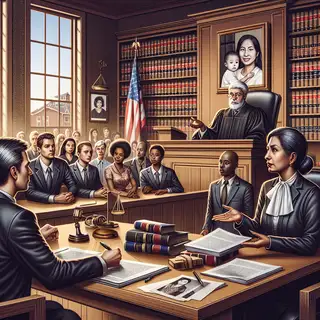











The Ninth Circuit Court of Appeals recently issued a ruling in the case of Diemert v. City of Seattle, No. 25-1188, which has significant implications for workplace discrimination claims. The court's decision affects Joshua Diemert, a former employee of the City of Seattle, who alleged that he faced a racially hostile work environment due to the City’s Race and Social Justice Initiative (RSJI). This case raises important questions about workplace equality and the treatment of employees based on race.
Diemert, a white man, worked for the City’s Human Services Department and claimed that the RSJI, which is designed to address institutionalized racism, created a hostile work environment for him. He argued that the initiative classified employees based on race and led to various discriminatory incidents in the workplace. The case has drawn attention to how race-conscious policies can impact employees of all backgrounds.
The dispute began when Diemert filed a lawsuit against the City of Seattle in November 2022, following his resignation in September 2021. He claimed violations of the Equal Protection Clause of the Fourteenth Amendment, as well as hostile work environment, constructive discharge, disparate treatment, and retaliation under Title VII of the Civil Rights Act and the Washington Law Against Discrimination (WLAD). The case eventually made its way to the Ninth Circuit after the district court granted summary judgment in favor of the City, dismissing Diemert's claims.
The Ninth Circuit's ruling, issued on September 28, 2026, affirmed in part and reversed in part the district court's decision. The court ruled that Diemert had established a genuine issue of material fact regarding his claims of a racially hostile work environment. Chief Judge Mary H. Murguia, along with Judges William A. Fletcher and Lucy H. Koh, emphasized that viewing the evidence in the light most favorable to Diemert, he had shown that he was subjected to conduct because of his race that was unwelcome and sufficiently severe to alter the conditions of his employment.
The court stated, "Diemert has established a genuine issue of material fact as to whether he was subjected to a racially hostile work environment in violation of Title VII and the WLAD."
However, the court upheld the district court's summary judgment on Diemert's claims of constructive discharge, disparate treatment, and retaliation. The judges concluded that Diemert did not provide sufficient evidence to support these claims, particularly regarding his allegations that the City failed to investigate his discrimination claims and treated him unfairly.
This ruling has important implications for workplace discrimination cases, particularly those involving race-conscious initiatives. By affirming Diemert's hostile work environment claims, the Ninth Circuit has highlighted the necessity for employers to ensure that their diversity and inclusion programs do not inadvertently create a hostile environment for any employees. The court's decision may encourage other employees who feel discriminated against to come forward with their claims, knowing that they may have a viable path to seek justice.
The case also raises questions about the balance between addressing historical and ongoing discrimination through initiatives like the RSJI and ensuring that all employees feel safe and valued in their workplaces. As organizations strive to promote diversity and inclusion, they must also be mindful of the experiences of all employees, regardless of their racial or ethnic backgrounds.
Moving forward, this ruling may set a precedent for similar cases involving claims of hostile work environments related to race-conscious policies. It underscores the importance of a thorough investigation of discrimination claims and the need for employers to create a truly inclusive environment that respects the rights of all employees.
As for what’s next, Diemert’s case may still be appealed to a higher court, but details were not available in the court filing. The outcome of this case could influence future litigation involving workplace discrimination and the legal standards applied to race-related claims.