

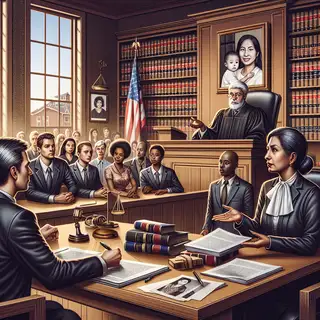








The Seventh Circuit Court of Appeals ruled on August 4, 2026, to uphold the life sentences of four members of the Gangster Disciples, a notorious Chicago-based gang. Sean Clemon, Dominque Maxwell, Warren Griffin, and Frank Smith were convicted of multiple federal crimes, including murder and racketeering. The court's decision addresses significant legal questions regarding the admissibility of evidence used during their trial.
This ruling impacts not only the defendants but also sets a precedent for how coconspirator statements are treated in future trials involving organized crime. The case underscores the complexities of federal racketeering laws and the challenges in ensuring fair trials amidst extensive evidence.
Background
The case began when the United States government indicted Clemon, Maxwell, Griffin, and Smith for their roles in the Gangster Disciples, which operates both in and out of prisons. The gang, founded by Larry Hoover, has been involved in various criminal activities, including drug trafficking and violent crimes.
The defendants were charged with multiple offenses stemming from a violent power struggle within the gang that escalated in 2018. This internal conflict led to the murders of Leroy Allen and Ernest Wilson, which were pivotal events in the case. After a lengthy trial, a jury found all four defendants guilty, leading to life sentences imposed by the district court.
The Ruling
The Seventh Circuit, with Judge Scudder presiding, addressed the defendants' appeal, focusing on the admission of coconspirator statements during the trial. The court noted that the district court had admitted numerous statements without sufficient pretrial evaluation, which raised concerns about compliance with Federal Rule of Evidence 801(d)(2)(E).
The court ruled, "We are troubled by the district court’s decision not to require a Santiago proffer, but we are unable to identify any ultimate error in admitting coconspirator statements."
Despite these concerns, the court ultimately affirmed the convictions, stating that the evidence presented at trial was sufficient to support the jury's verdicts. The judges emphasized the importance of ensuring that future cases involving similar complexities follow proper procedures for admitting evidence.
Impact
This ruling has significant implications for how coconspirator statements are handled in federal trials. The court highlighted the necessity of conducting pretrial assessments of such statements to avoid potential prejudices against defendants. The decision reinforces the importance of adhering to established legal standards to ensure fair trials.
Moreover, the ruling serves as a cautionary tale for both prosecutors and defense attorneys in organized crime cases. It emphasizes the need for thorough preparation and adherence to evidentiary rules to prevent complications during trials.
What’s Next
While the defendants can seek further legal recourse, including a potential petition for a writ of certiorari to the U.S. Supreme Court, details on any related cases or appeals were not available in the court filing. The implications of this ruling may influence ongoing and future cases involving organized crime and racketeering.