


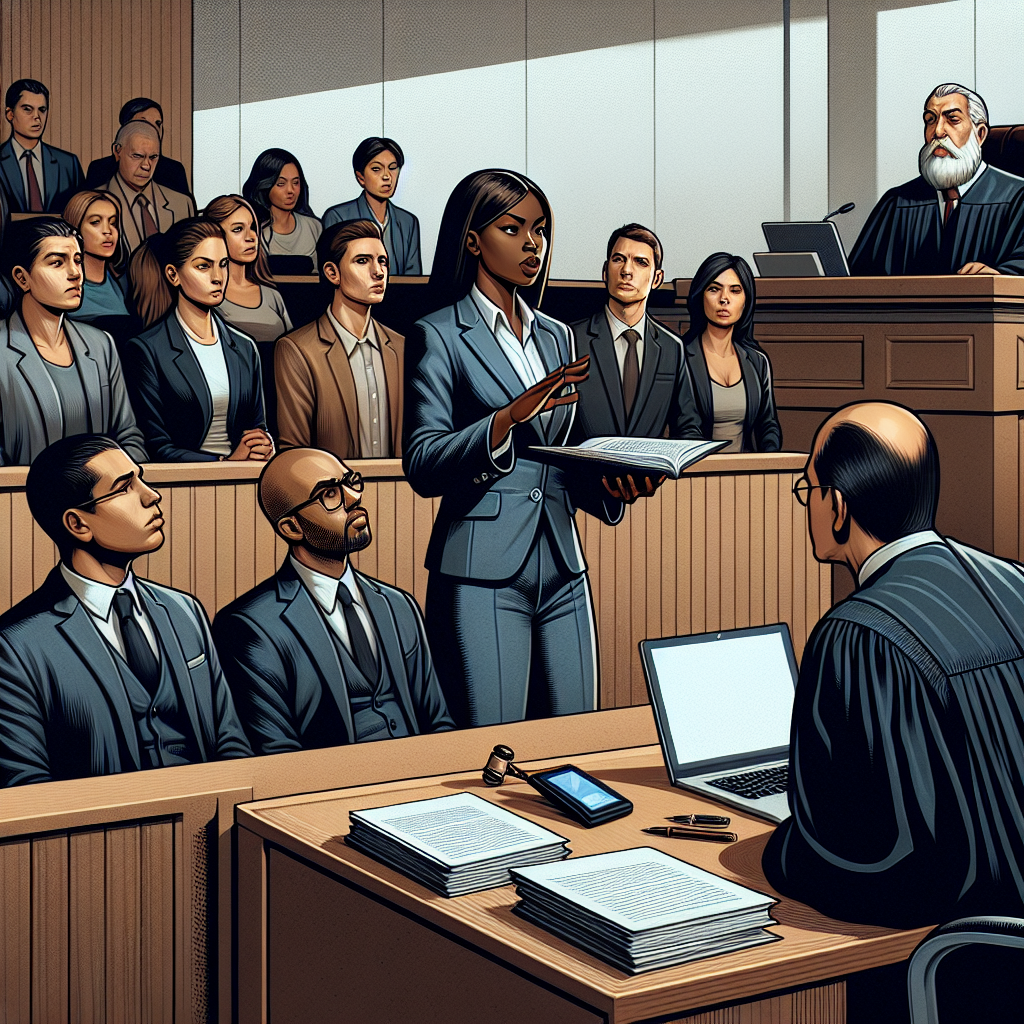






The Texas Court of Appeals recently upheld the conviction of John Henry Castillo for assaulting a public servant. The court's decision, delivered on July 9, 2026, affirms a 30-year prison sentence imposed by the Bexar County District Court. This ruling is significant as it reinforces the legal standards surrounding self-defense claims in cases involving law enforcement officers.
Castillo's case began when he was indicted on May 9, 2024, for assaulting a public servant, a third-degree felony under Texas law. The State sought to enhance his punishment due to Castillo's previous felony convictions, which ultimately led to a lengthy prison sentence. The case reached the Texas Court of Appeals after Castillo raised concerns about the effectiveness of his trial counsel during the guilt-innocence phase of his trial.
The dispute centers on whether Castillo's trial attorney was ineffective for not calling witnesses to support a self-defense claim and for failing to request a self-defense instruction for the jury. Castillo argued that these omissions negatively impacted his defense. The appeal was filed under docket number 13-25-00493-CR.
During the trial, evidence was presented showing that Castillo exhibited aggressive behavior while in custody at the Bexar County Jail. Officers from the Bexar County Sheriff's Office testified about an incident on March 20, 2024, when Castillo was placed in an emergency restraint chair due to his disruptive actions. The officers described how Castillo threatened them and even bit one of the officers through a mesh transport hood designed to prevent spitting. This behavior led to the charges against him.
On June 20, 2025, a jury found Castillo guilty of the assault charge. During the sentencing phase, Castillo expressed frustration with his attorney for not allowing him to testify about his treatment while in custody. The trial court later sentenced him to 30 years in prison after finding the State's enhancement allegations true.
The court ruled on Castillo's appeal, stating that he had not proven his trial counsel was ineffective. Justice Clarissa Silva, writing for the court, noted, "Castillo has failed to establish that his trial counsel was deficient during the guilt-innocence phase of trial in failing to present the testimony of BCSO Sergeant Rosalinda Yanez or Castillo himself and failing to request a self-defense instruction in the jury charge." The court emphasized that the record did not support Castillo's claims that his counsel's performance fell below acceptable standards.
The ruling also clarified the legal standards for self-defense in cases involving law enforcement. The court found that Castillo had not provided sufficient evidence to support a self-defense claim. Under Texas law, a person can only use self-defense against unlawful force, and in this case, the officers' actions were deemed lawful due to Castillo's aggressive behavior. The court concluded that Castillo was not entitled to a self-defense instruction because there was no evidence that the officers used unlawful force.
This ruling has important implications for future cases involving claims of self-defense against law enforcement. It reinforces the principle that defendants must provide evidence of unlawful force to justify a self-defense claim. The court's decision also highlights the challenges defendants face when arguing ineffective assistance of counsel, as they must demonstrate both deficiency and prejudice resulting from their attorney's performance.
Looking ahead, Castillo's options for appeal may be limited. The court's ruling is final unless new evidence emerges or there are grounds for further legal action. As of now, there are no related cases pending that could impact this ruling.