








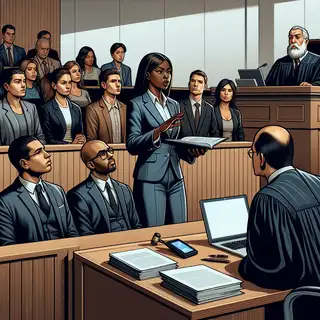



The Illinois Supreme Court has ruled that wrongful death claims against Uber Technologies, Inc. cannot be compelled to arbitration. This decision affects the estate of Mark Geller, who died in a car accident involving an Uber driver. The court's ruling clarifies the limits of arbitration agreements in cases involving wrongful death claims.
The case, Geller v. Uber Technologies, Inc. (Docket No. 132066), began when Gloria Sheridan Geller filed a complaint against Uber and its driver after her husband, Mark Geller, died in a crash in April 2022. The court's decision is significant as it addresses the enforceability of arbitration agreements in wrongful death cases and the rights of statutory beneficiaries.
In the initial complaint, Geller's estate alleged wrongful death, survival claims, and negligence against Uber and the driver, Ejaz Rathore. Uber sought to dismiss the case or compel arbitration based on terms-of-use agreements that both Mark and Gloria had accepted. The circuit court granted arbitration for the survival claims but denied it for the wrongful death claims, leading Uber to appeal the decision.
The appellate court reversed the circuit court's ruling, stating that the arbitration agreement included a delegation clause that required an arbitrator to decide the arbitrability of the wrongful death claims. This prompted the estate to seek further appeal to the Illinois Supreme Court, which agreed to hear the case.
The Supreme Court's ruling focused on whether Gloria Geller's arbitration agreement, which was related to her personal use of Uber’s services, could compel arbitration for wrongful death claims arising from her husband's use of the service. The court found that it could not. Justice Overstreet delivered the judgment, stating, "we answer in the negative, reverse the judgment of the appellate court, and affirm the circuit court’s order denying the motion to dismiss or compel arbitration of the estate’s wrongful death claims."
The court emphasized that the wrongful death claims were separate from the arbitration agreement that Gloria had entered into as an individual user of Uber. The court noted that wrongful death claims are derivative and do not arise from the decedent's individual contractual agreements. Therefore, the court ruled that there was no clear agreement to delegate the arbitrability of wrongful death claims to an arbitrator.
This ruling has significant implications for future cases involving wrongful death claims against companies that utilize arbitration agreements. It reinforces the idea that such agreements cannot be used to limit the rights of statutory beneficiaries in wrongful death cases. The court's decision clarifies that the rights of survivors to seek damages for wrongful death are distinct from any agreements made by the deceased.
Moving forward, this ruling may influence how companies draft arbitration agreements and how courts interpret them in wrongful death and personal injury cases. It highlights the importance of ensuring that arbitration agreements are clear and that they do not infringe upon the rights of beneficiaries under wrongful death statutes.
As for the next steps, Uber may consider appealing the decision or adjusting its arbitration agreements to better align with the court's ruling. There are no related cases pending at this time, but this ruling could set a precedent for similar cases in the future.