










A New York appellate court ruled against Tribeca Lending Corporation in a recent foreclosure case, affecting the company's ability to recover mortgage debt from a property owner. The decision, made by the Appellate Division of the Supreme Court of the State of New York, was issued on November 12, 2026, and it underscores the complexities involved in mortgage foreclosure actions.
The case, titled Tribeca Lending Corp. v. Battle, has implications for Tribeca and the defendant, Ricardo Battle, as well as for future foreclosure actions in New York. The court's ruling clarifies the legal requirements for amending foreclosure judgments and highlights the importance of proper service of legal documents.
Background
Tribeca Lending Corporation initiated this foreclosure action against Ricardo Battle in August 2006, seeking to recover on a mortgage tied to a property located in Queens, New York. A judgment of foreclosure and sale was entered by the Supreme Court on March 25, 2008. However, the case took a turn when, in September 2010, the mortgage and note were assigned to Wells Fargo Bank, N.A.
In January 2012, Wells Fargo filed a second foreclosure action against Battle and others. This second action faced challenges, and by March 2018, the court dismissed it due to improper service. In January 2024, Tribeca sought to amend the original 2008 judgment to replace itself with Residential Mortgage Loan Trust 2013-TT2 as the plaintiff. Battle countered this move with a cross-motion to dismiss the complaint.
The Ruling
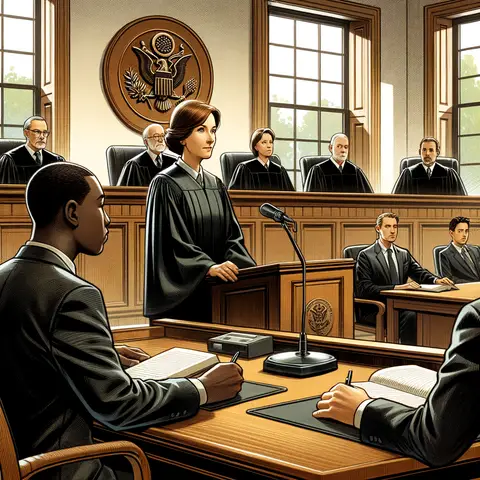
The Appellate Division, which included Judges Colleen D. Duffy, Linda Christopher, Carl J. Landicino, and Laurence L. Love, ultimately upheld the lower court's decision. The court affirmed the denial of Tribeca's motion to amend the caption of the judgment and granted Battle's cross-motion to dismiss the complaint. The court stated, "this action must be deemed discontinued upon the commencement of the 2012 action."
The ruling emphasized that the 2008 judgment of foreclosure was not final, as there was no record indicating that it was served upon Battle with notice of entry. This lack of service meant that the subsequent action initiated by Wells Fargo was invalid, leading to the dismissal of Tribeca's complaint.
Impact
This ruling has significant implications for Tribeca Lending and other lenders in similar positions. It reinforces the importance of following procedural rules in foreclosure actions, particularly regarding service of documents and the need for court permission when filing subsequent actions. The court's interpretation of RPAPL 1301(3) indicates that if a lender attempts to pursue a second foreclosure action without proper court leave, the initial action may be considered discontinued.
Going forward, lenders must ensure that they comply with all legal requirements to avoid losing their claims. This case may also serve as a precedent for future foreclosure disputes, emphasizing that courts will closely scrutinize the procedural aspects of such cases.
What's Next
Details were not available in the court filing regarding whether Tribeca plans to appeal the decision. There is no indication of any related cases pending at this time.
Read Next
 New York court reverses burglary conviction of Ferdinand Rivera
 Court upholds ruling on sex offender status for Erwin Canady
 Court upholds dismissal of Morton's complaint against Abihssira
 Court upholds dismissal of unemployment benefits appeal
 Hawaii Supreme Court denies motion for reconsideration in Magazu case
 Delaware court sanctions attorney for misuse of AI tool