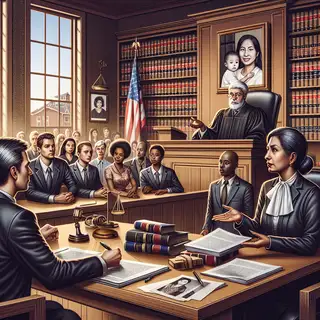




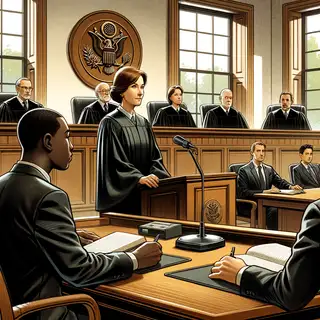





The U.S. District Court for the District of Columbia recently ruled in favor of the Small Business Administration (SBA) in a case involving Folsom Street. The court's decision, issued on September 26, 2026, concluded that the SBA's actions were lawful and justified. This ruling is significant as it affects how businesses interact with federal agencies and may set a precedent for future cases involving similar disputes.
Folsom Street, the plaintiff, challenged the SBA's decisions, claiming that they were unfairly hindering its operations. The court's ruling means that Folsom Street must accept the SBA's stance and cannot pursue further claims against the agency. This case highlights the complexities businesses face when dealing with government regulations and decisions.
Background
The parties involved in this case include Folsom Street, a business that has not been specifically identified in the court documents, and the Small Business Administration, a federal agency dedicated to supporting small businesses through various programs and services. Folsom Street filed a lawsuit against the SBA, claiming that the agency's actions negatively impacted its business operations.
The dispute arose after the SBA made decisions regarding funding and support that Folsom Street believed were unfavorable. The business contended that these decisions were unjust and sought relief through the court system. The case was filed in the District Court for the District of Columbia under Civil Action No. 2022-0926. After the initial filings, both parties submitted motions for summary judgment, which is a request for the court to decide the case based on the facts presented without going to trial.
The court's decision came after reviewing the arguments from both sides. Folsom Street maintained that the SBA's actions were arbitrary and capricious, while the SBA argued that its decisions were within its legal authority and aligned with its mission to support small businesses effectively.
The Ruling
In its ruling, the court granted the SBA's cross-motion for summary judgment and denied Folsom Street's motion for summary judgment. Judge Jia M. Cobb presided over the case and stated, "For the reasons stated in the accompanying memorandum opinion, it is hereby ORDERED that Defendants’ cross-motion for summary judgment is GRANTED, and Plaintiff’s motion for summary judgment is DENIED." This ruling effectively ends the case, as the court ordered the Clerk of Court to terminate the proceedings.
The court's decision indicates that it found the SBA's actions to be lawful and justified, aligning with the agency's mandate to assist small businesses. The ruling emphasizes the importance of the SBA's discretion in making decisions that impact businesses, which can sometimes lead to disputes when a business disagrees with the agency's assessment.
Impact
This ruling has significant implications for Folsom Street and potentially for other businesses that may find themselves in similar situations. By siding with the SBA, the court reinforced the agency's authority to make decisions that affect small businesses. This outcome may discourage other businesses from pursuing similar claims against the SBA, knowing that the court may be inclined to support the agency's actions.
The decision also highlights the challenges businesses face when navigating federal regulations and seeking support from government agencies. It underscores the need for businesses to clearly understand the criteria and processes involved in obtaining assistance from the SBA. Moreover, this ruling may set a precedent for future cases where small businesses challenge the actions of federal agencies, indicating that courts may defer to the agencies' expertise in these matters.
What's Next
Following this ruling, Folsom Street has limited options for recourse. The court's decision is final and appealable, meaning that Folsom Street could potentially seek to challenge the ruling in a higher court. However, details regarding the likelihood of an appeal or any related cases were not available in the court filing. The outcome of this case may influence how similar disputes are handled in the future, particularly in relation to the SBA's role in supporting small businesses.