








A federal court has ruled that the Federal Communications Commission (FCC) did not violate the Freedom of Information Act (FOIA) by denying a request for records related to the COVID-19 vaccine mandate of the Universal Service Administrative Company (USAC). The decision affects former USAC employee Ntseh Monikang, who sought information after being terminated over the vaccine mandate.
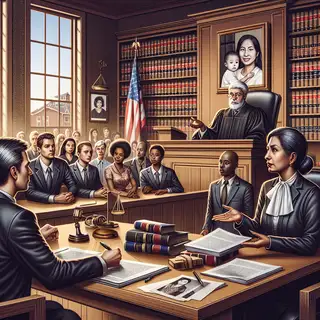
The case, Monikang v. Federal Communications Commission, was decided by Judge Tanya S. Chutkan in the District Court for the District of Columbia. The ruling is significant because it clarifies the boundaries of what constitutes agency records under FOIA, particularly in relation to independent organizations like USAC.
Background
Ntseh Monikang was employed by USAC as a database engineer starting in 2014. His role involved managing database systems that supported the administration of the Universal Service Fund (USF), a federal telecommunications program overseen by the FCC. In January 2022, Monikang was placed on unpaid leave and subsequently terminated for allegedly violating USAC's COVID-19 vaccine mandate, which he claimed was enforced without proper consideration of his religious exemption request.
On November 11, 2024, Monikang submitted a FOIA request to the FCC, seeking records related to USAC's COVID-19 vaccine mandate policy. His request included seven specific subparts, asking for details about the approval of the mandate, the number of exemption applications, and communications between FCC and USAC personnel regarding the mandate.
The FCC denied Monikang's FOIA request on November 15, 2024, stating that USAC is not a federal agency and that the records he sought were not in the FCC's possession or control. Monikang filed an administrative appeal, arguing that the requested materials fell within FOIA's scope due to the FCC's oversight of USAC's operations. However, the FCC did not respond to this appeal.
The Ruling
On March 8, 2026, the court issued its opinion, ruling in favor of the FCC. The court granted the FCC's motion for summary judgment and denied Monikang's cross-motion for summary judgment. Judge Chutkan stated, "The FOIA applies to federal agency records, meaning materials that are in an agency’s possession and control. Materials that are not in the possession or control of an agency, however, are not agency records subject to the FOIA."
The court found that four of the seven subparts in Monikang's FOIA request did not seek identifiable agency records, as they asked for specific facts and statistics rather than documents. The court noted that FOIA does not require agencies to answer questions disguised as requests for records.
Furthermore, the court concluded that the records Monikang sought were not agency records as defined by the FOIA. The FCC provided a declaration from Daniel Daly, the agency's Managing Director, affirming that USAC is an independent organization and that the FCC does not control or maintain the records related to USAC's personnel policies, including the vaccine mandate.
Impact
This ruling has important implications for future FOIA requests, particularly those involving independent organizations that operate under federal oversight. It clarifies that agencies like the FCC are not obligated to disclose records from entities like USAC unless those records are explicitly recognized as agency records under FOIA. This decision may influence how individuals approach FOIA requests in the future, especially when dealing with non-agency entities.
The ruling also emphasizes the need for requesters to frame their FOIA requests carefully to ensure they align with the definition of agency records. Monikang's case highlights the challenges individuals may face when seeking information about policies from organizations that are not directly controlled by federal agencies.
What's Next
Monikang can appeal this decision, but the court's ruling sets a precedent that may make it challenging to overturn. Details regarding any related cases or further legal actions were not available in the court filing.