









The Idaho Supreme Court recently vacated the conviction of Tony Rapley Crombie for domestic battery with traumatic injury, a decision that impacts how domestic violence cases are prosecuted in the state. The ruling, issued on September 25, 2026, clarifies the legal standards for lesser included offenses in domestic violence cases and emphasizes the importance of proper jury instructions.
This case arose from an incident involving Crombie and his ex-girlfriend, referred to as D.D. The court's decision is significant not only for Crombie but also for future defendants facing similar charges, as it sets a precedent regarding jury instructions in domestic violence cases.
Background
The dispute began on December 9, 2021, when Crombie was charged with attempted strangulation after D.D. reported that he choked her during an argument. Crombie and D.D. had a tumultuous on-off relationship from 2019 to 2021, during which Crombie lived with her until their breakup a few months prior to the incident.
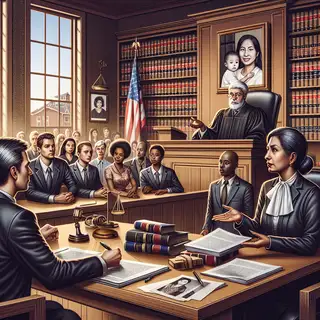
During the trial, D.D. testified that Crombie entered her home uninvited and choked her, preventing her from calling 911. She described the incident as terrifying, stating that she thought he would kill her. Crombie, however, claimed that D.D. was the aggressor and that he never harmed her. The jury ultimately acquitted Crombie of attempted strangulation but found him guilty of domestic battery with traumatic injury, leading to his appeal.
The Ruling
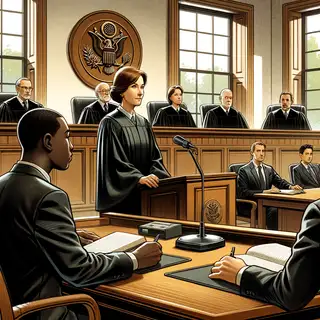
The Idaho Supreme Court ruled that the district court erred by instructing the jury on domestic battery with traumatic injury as a lesser included offense of attempted strangulation. The court stated, "the district court erred by instructing the jury on domestic battery with traumatic injury as a lesser included offense." This ruling was based on the conclusion that domestic battery with traumatic injury requires proof of a battery and a traumatic injury, while attempted strangulation does not require any injury at all.
The court found that the jury's conviction of Crombie for domestic battery was directly tied to the erroneous instruction, which misled the jury. The court emphasized that the jury should not have been given the option to consider the lesser charge at all, as it was not a lesser included offense of attempted strangulation.
Impact
This ruling has significant implications for future domestic violence cases in Idaho. It clarifies that juries should not be instructed on lesser included offenses unless they meet specific legal criteria. The decision reinforces the importance of accurate jury instructions in ensuring fair trials, especially in sensitive cases such as domestic violence.
Additionally, the court's ruling vacates Crombie's conviction and requires the lower court to enter a judgment of acquittal on the charge of attempted strangulation, which may affect how similar cases are prosecuted in the future. This ruling emphasizes the need for careful consideration of the charges brought against defendants in domestic violence cases.
What's Next
Following this ruling, it remains unclear whether the State of Idaho will seek to appeal the decision or pursue further legal action against Crombie. The court's decision effectively ends the current legal proceedings against him regarding this case. Details were not available in the court filing regarding any related cases or potential appeals.