
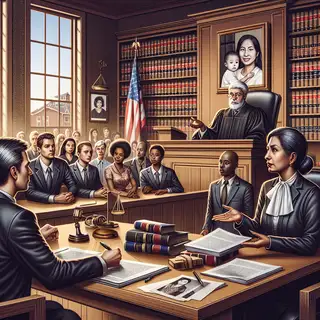









The First Circuit Court of Appeals recently upheld a ruling that favors the Harvard Graduate Students Union - United Autoworkers, Local 5118 (the Union) in its dispute with the President and Fellows of Harvard College (Harvard). This decision, which stems from a grievance filed by the Union, is significant for graduate student workers at Harvard and may have broader implications for labor rights in academic settings.
The case, docket number 25-1598, centers on whether Harvard improperly excluded certain graduate student workers from its bargaining unit. The court's ruling is particularly important as it reinforces the rights of graduate student workers to union representation and could influence similar cases across the country.
Background
The parties involved in this case are the President and Fellows of Harvard College, the plaintiff and appellant, and the Harvard Graduate Students Union - United Autoworkers, Local 5118, the defendant and appellee. The dispute began when the Union, representing graduate student workers at Harvard, filed grievances against Harvard for failing to include certain psychology doctoral students in its weekly bargaining unit lists.
The Union had previously ratified a collective bargaining agreement (CBA) with Harvard in November 2021, which defined the terms of employment and representation for graduate student workers. The CBA included provisions for the recognition of graduate students as part of the bargaining unit, specifically those who served as Research Assistants. The Union argued that Harvard violated this agreement by not providing appointment letters to certain graduate students, thereby excluding them from union representation.
The grievances were submitted for arbitration as outlined in the CBA, and the arbitrator ultimately ruled in favor of the Union. Harvard then sought to vacate this arbitration award in the district court, arguing that the grievance was not substantively arbitrable and that the arbitrator had exceeded her authority.
The Ruling
The First Circuit Court affirmed the district court's decision to uphold the arbitration award. The court found no error in the district court's decision to maintain the arbitrator's judgment or in the arbitrator's interpretation of the CBA. The ruling stated, “the University violated the CBA by failing to classify psychology PhD students conducting research as Research Assistants under Article 1 and/or as Research Assistant 1 under Article 2.”
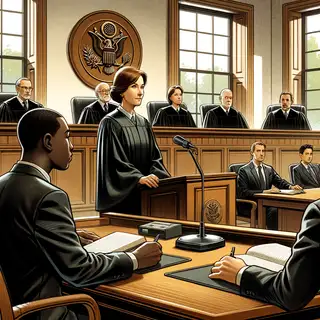
The judges on the panel included Gelpí, Thompson, and Dunlap. The court emphasized that the arbitrator's role was to interpret the CBA and determine whether Harvard had violated it by excluding certain graduate students from the bargaining unit. The court supported the arbitrator's findings, stating that the plain language of the CBA and the parties' history established that the psychology doctoral students qualified as Research Assistants.
Impact
This ruling has significant implications for graduate student workers at Harvard and potentially for similar cases at other universities. By affirming the arbitrator's decision, the court has reinforced the rights of graduate student workers to union representation, particularly those who perform research under faculty supervision. This decision may encourage other graduate student unions to pursue grievances against their institutions if they believe their rights are being violated.
The ruling also sets a precedent regarding the interpretation of collective bargaining agreements in academic settings. It clarifies that the definition of who qualifies as a union member can extend beyond traditional employee classifications, which could influence future labor negotiations and agreements in academia.
What's Next
Following this ruling, Harvard may seek further legal recourse, including a potential appeal to the U.S. Supreme Court. However, the court's decision is a strong affirmation of the rights of graduate student workers, making it a challenging case for Harvard to overturn. There are currently no related cases pending that would directly impact this ruling.