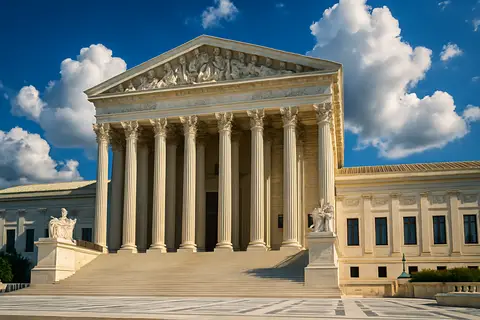
The Supreme Court of the United States recently denied a petition for a writ of certiorari in the case of Khatibi v. Yip, No. 25-1240, on November 16, 2026. This decision affects medical educators in California who are required to include implicit bias training in their continuing medical education (CME) courses. The case has raised significant questions about First Amendment rights and government regulation of speech.
The case centers on Dr. Azadeh Khatibi, a California-licensed ophthalmologist, and a nonprofit organization called Do No Harm. They challenged a California law mandating that CME courses address implicit bias in healthcare. Khatibi and Do No Harm argue that this requirement infringes on their free speech rights by compelling them to promote a specific viewpoint about implicit bias, which they disagree with. The Ninth Circuit Court of Appeals upheld the law, stating that the CME courses constituted government speech rather than private speech.
The dispute arose after California implemented a law in 2019 requiring that all CME courses include discussions on implicit bias, effective January 1, 2022. The law mandates that these courses provide examples of how implicit bias affects healthcare outcomes and strategies to address these biases. Khatibi and Do No Harm contend that they should not be forced to convey the state’s preferred message on this controversial topic.
The case reached the Supreme Court after the Ninth Circuit ruled that the CME courses were government speech and thus not subject to First Amendment scrutiny. The Ninth Circuit's decision relied heavily on the government's extensive regulation of CME courses, which it argued transformed the content of these courses into government speech. The Ninth Circuit stated, "CMEs eligible for Board credit constitute government speech," emphasizing the breadth of California’s regulatory scheme.
Justice Clarence Thomas, joined by Justice Samuel Alito, dissented from the denial of certiorari. In his dissent, Thomas argued that the Ninth Circuit misapplied the government-speech doctrine. He stated, "First Amendment protections do not give way simply because a State heavily regulates speech." Thomas expressed concern that the Ninth Circuit’s ruling could allow the government to compel private speakers to convey its messages without facing constitutional scrutiny.
Thomas criticized the Ninth Circuit’s reliance on a three-factor test established in the case of Shurtleff v. Boston, which is used to determine whether speech is considered government speech. He contended that the Ninth Circuit’s approach collapsed these inquiries and failed to consider whether the government was speaking for itself or regulating private expression. He stated, "The government-speech doctrine occupies a narrow corner of our First Amendment jurisprudence."
The implications of this case are significant for medical educators and professionals across the country. By upholding the CME requirement as government speech, the Ninth Circuit’s decision could set a precedent that allows states to impose similar compelled speech requirements in other professions. Thomas raised concerns about potential future scenarios where the government could mandate speakers to promote specific views on contentious issues, such as abortion or gender-transition surgeries, under the guise of government speech.
Moving forward, the denial of certiorari means that the Ninth Circuit's ruling stands, and California's CME requirements will remain in effect. This decision may embolden other states to implement similar regulations regarding continuing education requirements for licensed professionals. The ruling raises questions about the balance between government regulation and individual rights, particularly in the context of free speech.
The case also highlights ongoing debates about implicit bias training in various fields, including healthcare. Proponents argue that addressing implicit bias is essential for improving healthcare outcomes, while opponents, like Khatibi and Do No Harm, contend that such training can perpetuate divisive ideas and does not effectively address disparities in healthcare.
As of now, it is unclear if there will be an appeal or if related cases will emerge challenging similar laws in other states. The issue of compelled speech and government regulation of professional education remains a contentious topic, and future cases may further clarify the boundaries of First Amendment protections in this context.