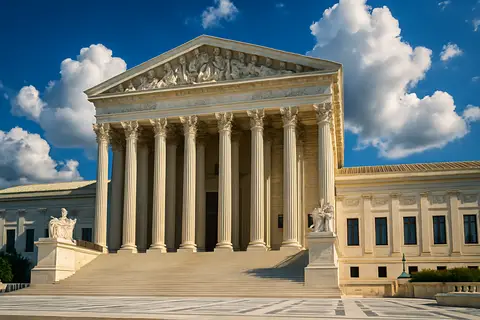
The Supreme Court of the United States has denied a petition challenging Maryland's strict gun laws, which prohibit carrying firearms in various public places. This decision, made on November 16, 2026, affects gun owners in Maryland and raises questions about the balance between public safety and Second Amendment rights.
The case, titled Katherine Novotny, et al. v. Wes Moore, Governor of Maryland, et al., was filed under docket number 25-1324. The court's refusal to hear the case means that the lower court's ruling, which upheld Maryland's restrictions, will remain in effect. This ruling is significant as it impacts the rights of law-abiding citizens to carry firearms in public spaces.
Background
The petitioners in this case, Katherine Novotny and others, challenged several Maryland laws that restrict where individuals can carry firearms. Maryland law prohibits carrying firearms in public demonstrations, mass transit, places of amusement, healthcare facilities, locations that sell alcohol for onsite consumption, and large areas of state park and forest land. These restrictions were upheld by the Fourth Circuit Court of Appeals, which classified these locations as "sensitive places" where the carrying of firearms could be limited.
The case reached the Supreme Court after the Fourth Circuit's decision, which found that Maryland's laws were consistent with historical traditions of firearm regulation in sensitive locations. The petitioners argued that these laws infringed upon their Second Amendment rights, which protect the right to keep and bear arms.
The Ruling
The Supreme Court ruled to deny the petition for a writ of certiorari, meaning they will not review the Fourth Circuit's decision. Justice Clarence Thomas, in a statement regarding the denial, expressed skepticism about whether Maryland's laws are consistent with the historical tradition of firearm regulation. He noted, "I harbor serious doubts that our Nation’s historical tradition of firearm regulation supports many of these sweeping restrictions."
Justice Thomas acknowledged that while there is a tradition of regulating firearms in certain sensitive places, he believes the current breadth of Maryland's restrictions may go too far. He stated, "Expanding the category of ‘sensitive places’... to all places of public congregation... would eviscerate the general right to publicly carry arms for self-defense." The ruling leaves the existing restrictions in place while suggesting that a more narrowly focused case could provide a better opportunity for the Court to address these issues.
Impact
The denial of certiorari means that Maryland's strict gun laws will remain in effect, impacting law-abiding gun owners who wish to carry firearms in public spaces. This ruling does not set a national precedent but reinforces the authority of states to regulate firearms in sensitive locations. Other states with similar laws may feel emboldened to maintain or implement their own restrictions.
Justice Thomas's statement indicates that there is an ongoing debate about the limits of the Second Amendment and the definition of sensitive places. The ruling may prompt further legal challenges in other jurisdictions as gun owners seek to clarify their rights under the Constitution. The decision also highlights the tension between public safety concerns and individual rights, a topic that continues to be relevant in discussions about gun control in America.
What's Next
While this ruling cannot be appealed, it may inspire future cases that challenge similar laws in other states. Legal experts and advocates on both sides of the gun control debate will likely continue to monitor developments in this area, particularly as more states enact or enforce their own regulations concerning firearms in public spaces.